




Best Feeding Schedule for Autoflowering Plants


- 1. Intro
- 2. Why choose autoflowers?
- 2. a. But, what exactly are autos, and what makes them unique?
- 2. b. How about autoflowering disadvantages?
- 3. Different types of nutrients
- 4. Nutrients for the seedling stage
- 5. Nutrients for the vegetative stage
- 6. Nutrients for the pre-flowering and flowering stage
- 7. Autoflower nutrient schedule (liquid fertilizers)
- 7. a. Organic nutrient schedule for autos (powdered fertilizers)
- 7. b. Expert opinion by jorge cervantes - co-author:
- 8. Nutrient overfeeding
- 9. Nutrient underfeeding
- 10. Flushing and when to stop feeding
- 11. The best cannabis nutrient brands
- 11. a. Other great options
- 12. In conclusion
Preface
Autoflowering cannabis plants are a marvel in the world of cultivation. Their swift growth cycle and inherent resilience have made them popular among budding enthusiasts and seasoned cultivators. This article, enriched by the insights of Enzo Schillaci and Jorge Cervantes, delves deep into the nuances of nourishing these unique plants, guiding them from their initial sprout to their abundant harvest. As these autoflowers have distinct nutritional needs, understanding their life cycle becomes pivotal to ensuring they reach their zenith.
The article meticulously charts the journey of autoflowering plants, emphasizing the significance of tailoring the feeding schedule to each growth stage. From germination to the flowering phase, the piece provides a comprehensive breakdown of the specific nutrients essential at every step. With its detailed insights, this guide serves as an invaluable resource for those keen on optimizing the health and yield of their autoflowers.
A notable highlight of the article is its focus on the crucial role of pH levels in the growing medium. Achieving and maintaining the proper pH balance is foundational for nutrient absorption in container crops. Any deviations from this balance can lead to nutrient lockouts or deficiencies, potentially hampering the plant's growth. Additionally, the piece sheds light on the pitfalls of overfeeding, offering insights into recognizing and rectifying this common challenge.
For aficionados of organic cultivation, the article offers a deep dive into the world of organic nutrients. These natural alternatives promise enhanced plant health and contribute to the final yield's overall quality and flavor. The emphasis on organic cultivation resonates with the growing global trend towards sustainable and eco-friendly agricultural practices.
The expertise behind this article is genuinely commendable. With his roots in Argentina and a formative journey in Amazonas, Brazil, Enzo Schillaci brings a wealth of knowledge on organic cultivation. His global travels and education at Oaksterdam University have further honed his understanding of the cannabis plant. Enzo's authority in the field is undeniable, with writings featured on platforms like High Times, CannabisTech, and more. Coupled with the vast experience and insights of Jorge Cervantes, renowned for his contributions to cannabis cultivation literature, including "The Cannabis Encyclopedia," this article stands as a testament to the depth of knowledge and passion both authors bring to the table.
1. Intro
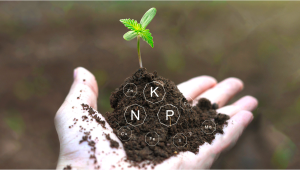
Macro and Micro nutrients are the life source for autoflowering cannabis. Macronutrients are the main nutritional source for cannabis plants, these are in larger quantities such as Nitrogen (N), Phosphorus (P) and Potassium (K). Micronutrients, on the other hand, are as necessary, however, they occupy a secondary position. Here are some micronutrients necessary for plants: Calcium (Ca), Sulfur (Su), Copper (Cu), Magnesium (Mg), Iron (Fe), Zinc (Zn) Manganese (Mn).
Both macro and micronutrients are delivered by watering with mixed nutrients, pre-amended soil, or slow-release powder, when feeding, remember that you can always add more but never take away nutrients.
The available nutrients on the market were made for photoperiodic plants, so when using them on autoflowering cannabis without a feeding scheme, chances are you’ll overfeed or starve it. So, to avoid damaging your plant, here’s a detailed feeding schedule that will allow you to make the most of your phoperiodic nutriments.
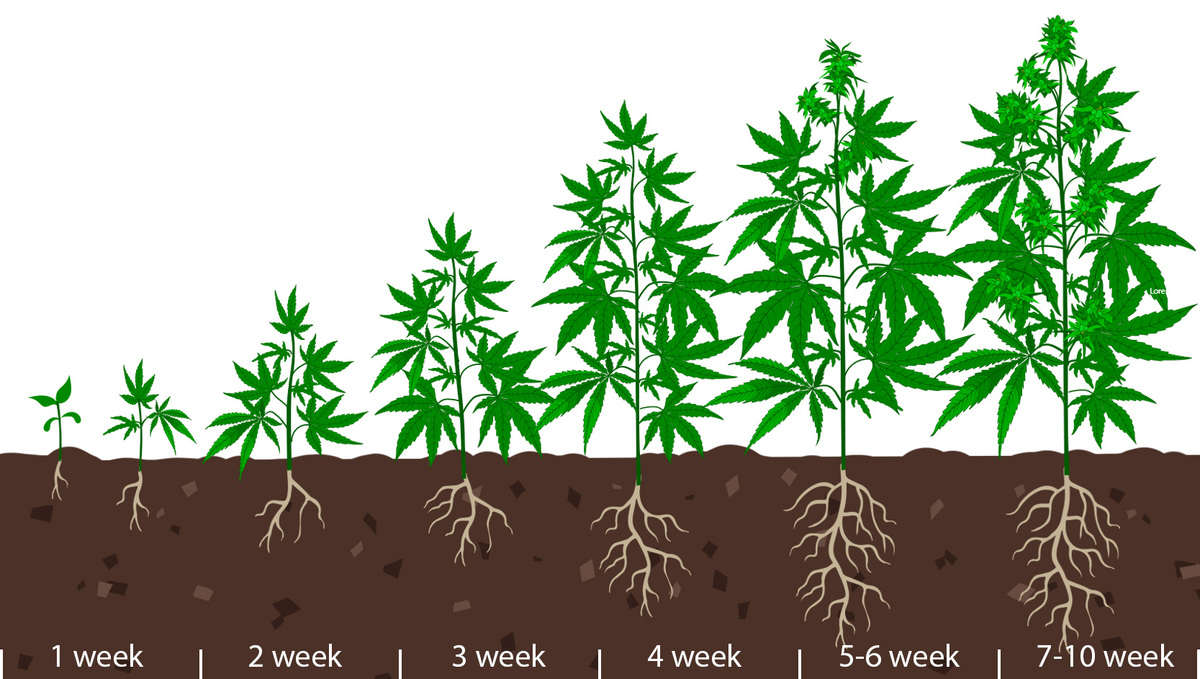
- Week 0 Germination - Plain water;
- Week 1 Seedling - Plain water;
- Week 2 Vegetating - ⅛ veg. nutes;
- Week 3 Vegetating - ¼ veg. nutes;
- Week 4 Vegetating - ¼ to ½ veg. nutes;
- Week 5 Pre-flowering - ¼ veg. nutes + ⅛ bloom;
- Week 6 Flowering - ¼ bloom + ⅛ veg. nutes;
- Week 7 Flowering - ¼ bloom nutes;
- Week 8 Flowering - ½ bloom nutes;
- Week 9 Flowering - ½ bloom nutes;
- Week 10 Ripening - ⅛ bloom nutes;
- Week 11 Flushing - Plain water.
2. Why Choose Autoflowers?
Autos, or autoflowering cannabis, is no longer a novelty in the cannabis industry. Developed by passionate seed companies and breeders, this newer type of seeds are a true competitor to photoperiodic varieties. The terpene and cannabinoid percentages are also a factor that can impact the choice of the grower.
But, what exactly are autos, and what makes them unique?
The main strait of this new type of seeds comes from its inborn ability to pass from the vegetative stage to the flowering stage in all lighting conditions. Thanks to its Cannabis Rudealis genetics, the autos have their own times that activate automatically. One important point is that unlike photoperiods, they remain in the vegetative stage if left for under 18h under the light. Switching the light time to 12 hours/day will start the flowering stage.
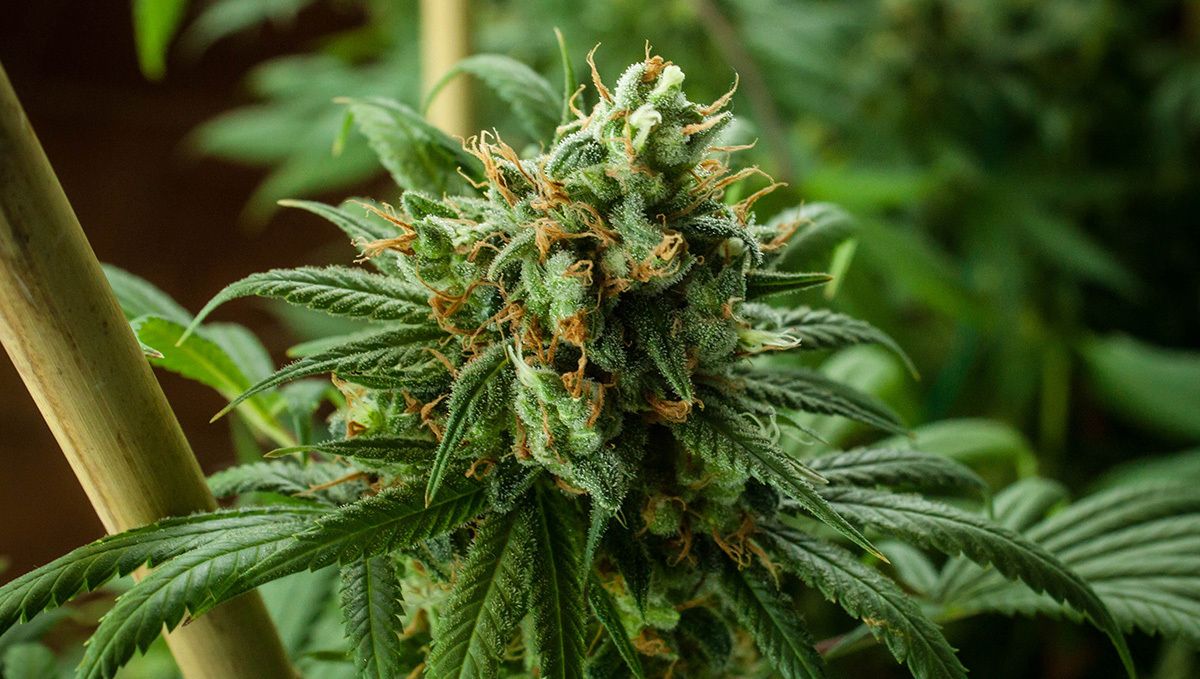
On the other hand, autoflowering cannabis is much less sensible. You can even leave it under the light for 24h/day and it will still get to the flowering stage. No switches necessary. This simple, yet important step is a great advantage for many growers, but let’s see what actually has an autoflower to offer.
Resilient Genetics
Due to its Rudealis genes, the autoflowering cannabis is much more versatile and can thrive in harsher conditions than photoperiod strains. Native to Eastern Europe and Siberia, autoflowers can easily adapt to cool temperatures, higher altitudes and various humidity levels.
More Discreet
A great option for guerilla-type grow ops, sunflowers generally grow quite small. Most of the time, you can expect your larger plants to reach up to 1.5 m (5 feet) when fully grown, but generally they grow to 1 m (3 feet) or less. These are ideal for limited spaces, and they’re easy to hide from prying eyes.
Less Nutrients Needed
Of course, all types of plants need some type of feeding. Luckily, autoflowers can thrive and grow with less expensive nutrients than photoperiod cannabis.

Lighting Quick Lifecycles
Instead of waiting 4 months or more to harvest photos, enjoy the beauty of harvesting great yields in 10 weeks with autoflowering cannabis.
Simple Light Demands
Photoperiod plants need a very strict light schedule to reach the point of flowering and harvesting. You’ll have to separate each plant so their light stages don’t interfere with each other. Imagine using separate rooms for each plant you have. For the autoflowering cannabis, you can plant as many plants as they fit in the grow room because they’ll flower on their own no matter the light.
Easy to Run in a Perpetual Harvest Routine
A great perk of the autoflowering cannabis is that you can keep harvesting from the same plant. Stagger the ends of the plant and that’s it. This can be a pain in the ass if you are growing photos, as they need totally different light timings for veg and flower. With autos, you can have plants in any stage of growth in the same grow room with zero issues.
No Need to Worry About Light Leaks
This advantage ties back to the ease of lighting, but it is a big enough pro that it deserves its own section. If you jump through hoops to remove external light from your photoperiods, the autoflowering plants couldn’t care less.

Be careful with the light around your photoperiods because they might turn into hermies. All of your hard work would have been for nothing.
High CBD Percentages
Cannabis Rudealis has a naturally higher percentage of CBD. So, autoflowers have a slightly higher CBD percentage, in comparison to Sativa and Indica photoperiods.
Perfect for Novice and Experienced Cultivators Alike
Autoflowering cannabis is the best choice for beginners. Due to its advantageous growing ease, both experienced and novice growers can expect high yields with great THC and CBD content. The high potential of autoflowers makes even more seasoned growers put photoperiods back on the shelf.
How about autoflowering disadvantages?
While autoflowering cannabis has great features, there are still a few traits of the photoperiod strains that can compete with it.
Autos Can Not Be Cloned
Thanks to that handy inbuilt timer, unfortunately, auto strains simply cannot be cloned. Any cuttings taken will continue on the same timing schedule as the mother plant, which will mean that clones simply do not have time to grow before flowering begins. Thankfully, the quick lifecycle means that you can go from seed to harvest in the same time period as a normal cloning schedule, removing the need for cloning at all.
No High-Stress Training
High-Stress Training Techniques (HST) can produce amazing results with photoperiod strains. Techniques such as topping, fimming, super cropping, monster cropping, and schwazzing have all; popped up in the last few decades, but they are not advised for autoflowering strains. Autos just do no have enough time to bounce back from the stress, which means that using these types of plant training methods will most likely result in lower yields with less potency. For autos, stick to Low-Stress Training (LST) techniques to achieve the best results. A simple mix of the tie-down method and some scrogging can boost your final yield by as much as 25% in terms of weight.

3. Different Types of Nutrients
Nutrients can come in different forms. The most common are diluted in water, mixed with soil, and in powder form to be used as a slow-release top dressing or to be mixed with the medium. Usually, beginner growers ask What are the best nutrients? That will depend on your preference and method of growing, there are basically two types: organic and inorganic nutrients and there's a big difference between them, both of them can come in the three different forms we talked above but work in completely different ways.
Organic vs Inorganic
Organic focuses on creating and maintaining a rich medium filled with microorganisms. By using organic nutrients you’re not feeding the plant directly, you are enriching the medium where microorganisms present to feed on the nutrients, breaking them down and making it easy for the plant to absorb.
Because you’re not feeding the plant directly, she can decide when and which nutrients to absorb so unless you do it on purpose, it’s really hard to have problems related to an excess or lack of nutrients.
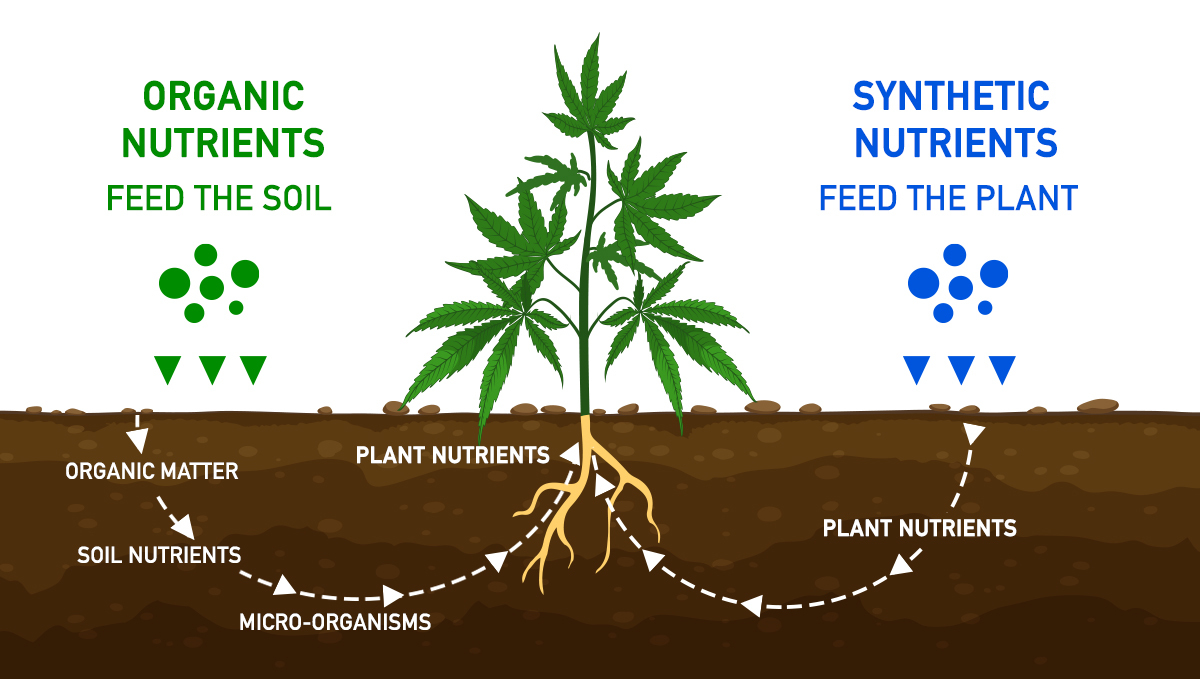
Inorganic nutrients work by delivering an exact amount of nutrients to the roots. To be able to do this without any damage to your plant you must really know the necessities of your autoflower. The nutrients needed for optimal growth vary from strain to strain so it’s really hard to know exactly what and when to feed. Usually, you start experimenting and if you see signs of underdevelopment or deficiencies you feed a little bit more.
On top of that, you will have to adjust the amount given to an autoflower to avoid wasting nutrients (organic) and to avoid burning your plants (inorganic). Manufacturers usually make available instructions with an approximate schedule and amounts for the products they sell but they usually are directed to photoperiodic plants. Having that in mind, we recommend always starting with half the recommended amount with autoflowers.

Slow-release
Slow-release nutrients can come in pellets or in powder form. Usually used as a top dressing or pre-mixed with soil, this is the simplest way of feeding because it slowly releases nutrients when watering. So you don’t have to worry about feeding your plant until harvest unless you see any signs of deficiency.
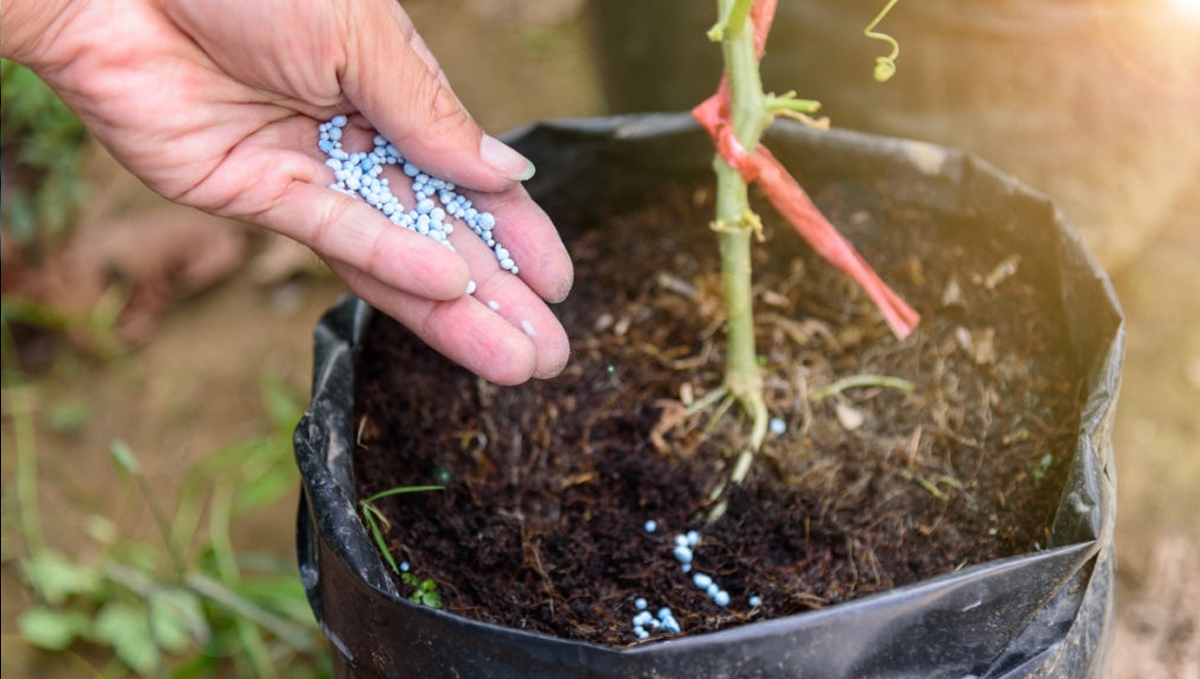
The best way to water when using slow-release feeding is water more often with less water, this way the pellets or powder will dissolve faster and you won’t have any problems. This way of feeding also comes with instructions directed for photoperiodic plants so with autoflowers you should (generally) use half of the recommended amount.
Tip
This way of feeding takes a couple of days to dissolve the pellets or powder if you water every couple of days. If you see signs of deficiency or you notice your autoflower is hungry, you can use a small amount of water-soluble nutrients to fix this immediately and give the slow-release nutrients a bit more time to dissolve.

Bottled nutrients
Bottled nutrients are what everybody knows, grower, or not. These fertilizers come in liquid form and are usually synthetic, and relatively cheap due to the wide selection available. Synthetic nutrients are popular amongst all types of growers, even though they’re not s safe as organic nutrients, you can effectively grow and harvest your plants without major problems. You can find a lot of different brands and their quality may differ but all fertilizers will contain basically the same elements and ratio for the vegetative (3-1-2) and the blooming stage (1-2-3), so it’s just a matter of preference.
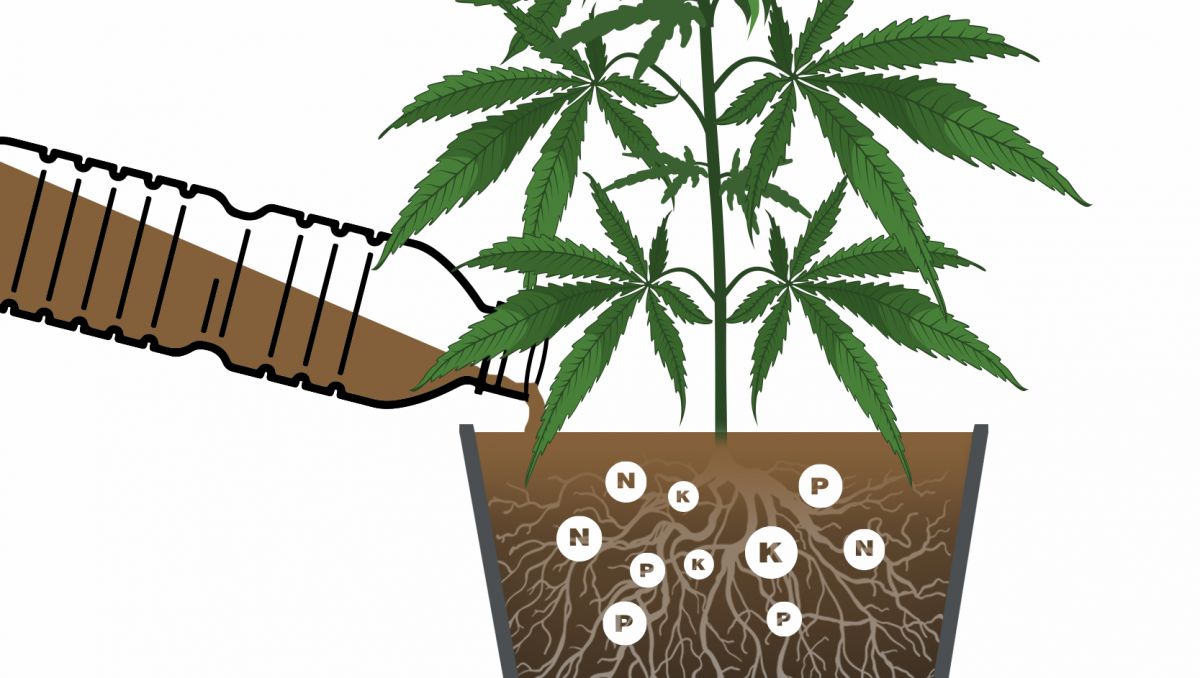
Have in mind that unlike organic feeding which focuses in creating an ecosystem in the soil, synthetic nutrients feed the roots directly so you can easily burn your autos, you should always start with a smaller dose and increase it gradually, this way you can check the signs your plant gives you and can adjust the amount of nutrients to your plant’s needs, avoid wasting nutrients and most importantly, avoid burning your plants.
Remember that because these nutrients are synthetic they’ll most likely kill the microorganisms present in the soil so (depending on the medium) you’ll have to provide all the micronutrients too, like Calcium and Magnesium, for example.
We recommend using organic nutrients when possible, this way you’ll be maintaining an ecosystem similar to what you find in nature, resulting in better tasting flowers and avoid overfeeding your autos.

4. Nutrients for the Seedling Stage
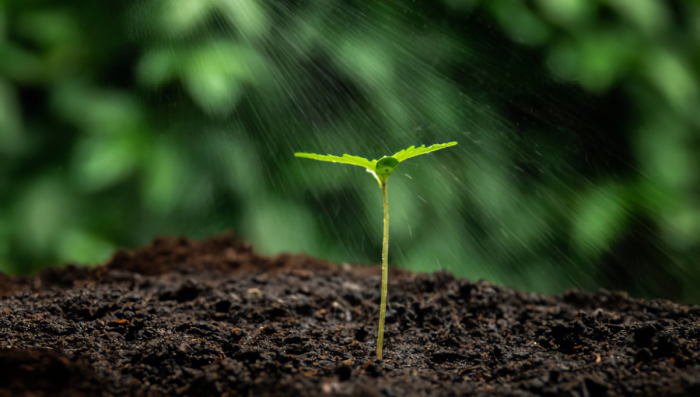
The seedling sprouts with two little leaves called Cotyledons. These leaves provide what the plant needs to survive until the first set of true leaves appear. The first two weeks of cannabis growth are the most crucial because the little seedling is establishing its root system and it is very fragile.
When to start feeding?
If you're feeding in the seedling stage you must be very careful not to overfeed. You can start your autoflower with 1/8 of the recommended nutrients or better yet, just give the plant water for that first couple of weeks. If you overfeed your plant at this stage of growth it is highly possible that the baby plant won’t survive or if it manages to survive then the overall yield of the damaged autoflower will be greatly diminished.
Tip
Water-soluble feeding gives the plant access to the nutrients immediately.
If you are using mediums with added nutrients then you don’t need to feed the plant for the first 2-3 weeks (until the pre-flowering stage). So you can relax and forget about those nutrients at this stage of its growth.
Tip
Always read the recommendations as amended mediums contain different amounts of nutrients. Some may have the amount needed for the first weeks but others can have the amount needed up to the pre-flowering stage.

5. Nutrients for the Vegetative Stage
Photoperiodic cannabis plants have a vegetative growth stage but autoflower plants go from the seedling phase straight to flowering without the need to change the light cycle.
Some growers believe that the time when the little seedling gets its true set of leaves until it starts flowering is the vegetative growth stage for autoflowers. But it really doesn’t matter how we call this stage because we need to feed it just like a regular photo-sensitive plant in its vegetative stage.
When we see that our autoflower plant starts to grow fast we need to start giving it more nutrients. Usually, it is best to give half of the recommended dose of nutrients, but if the plant gets really bushy you can give it a full dose.
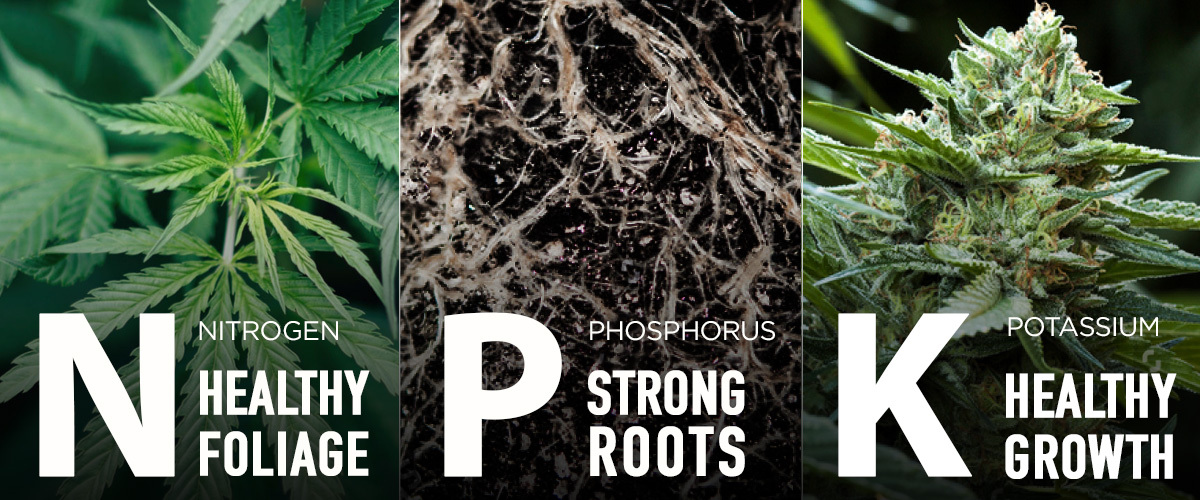
At the vegetative stage, cannabis needs a lot of Nitrogen (N) and a decent amount of phosphorus (P) and potassium (K).
No matter what the percentage of the other nutrients is, just make sure that Nitrogen (N) is available more than those other two elements. Autoflower cannabis also needs those secondary nutrients but commercial fertilizers usually have a mix of the other nutrients your plant needs in the solution.
6. Nutrients for the Pre-Flowering and Flowering Stage
After a couple of weeks in the vegetative stage, your auto will be mature enough to start developing flowers, when this happens your plants will start to develop pistils, which are a sign that your plant is entering the pre-flowering stage.
When to switch to bloom nutes?
Switching to bloom nutes starts in the pre-flowers stage. Start adding phosphorus and potassium to the plants into the half-and-half vegetative/blooming mix. Closer to the flowering stage, add the phosphor to help the development of the buds. Once your first buds appeared, switch to just bloom nutes.
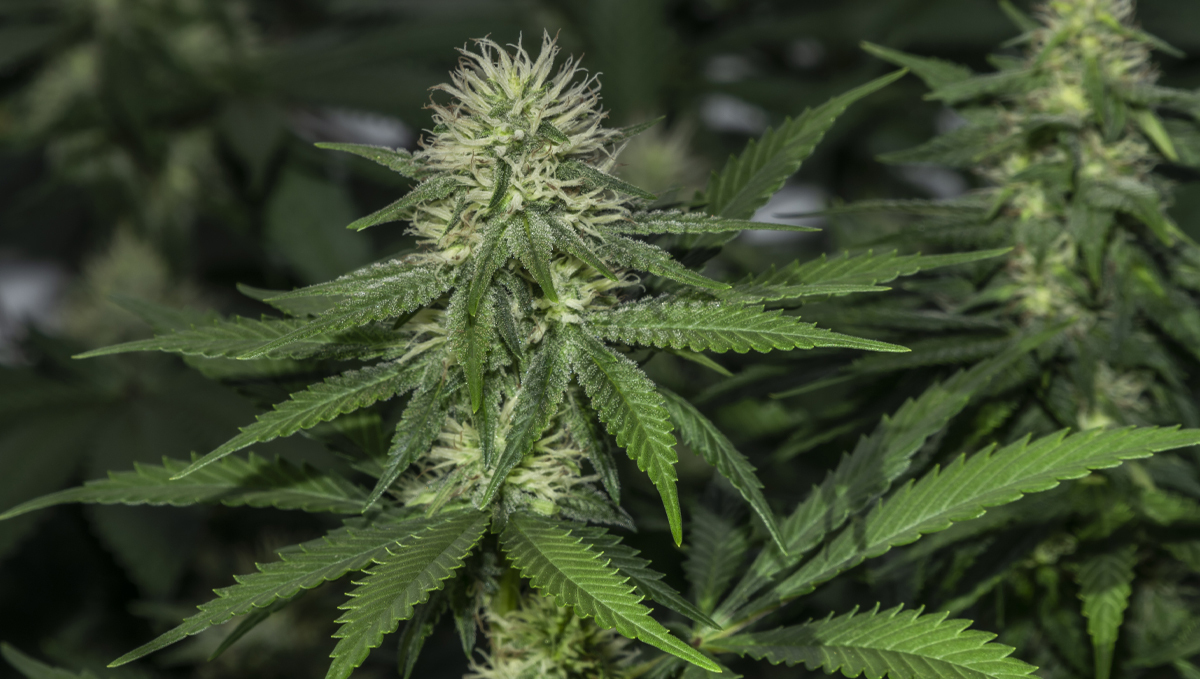
Unless you are an experienced grower who needs to harvest every last drop from a crop, you won’t need fancy fertilizers or over the top feeding schemes. Stick to the basics and you’ll be rewarded with great yields.

7. Autoflower Nutrient Schedule (Liquid fertilizers)
Each stage of your plant’s development has different feeding requirements. To avoid burning it by feeding it too much, follow the plan below and adapt it to your autoflower’
| Autoflower Feeding Chart for Inert Mediums | ||
|---|---|---|
| Week | Stage | Nutrients |
| 1 | Seedling | Water |
| 2 | Vegetative stage | ⅛ vegetative nutrients |
| 3 | Vegetative stage | ¼ vegetative nutrients |
| 4 | Pre-flowering stage | ½ Vegetative nutrients |
| 5 | First signs of flowers | ¼ bloom + ⅛ vegetative nutrients |
| 6 | Flowering stage | ½ bloom nutrients |
| 7 | Flowering stage | ½ bloom nutrients |
| 8 | Flowering & ripening | Flush |
| 9 | Ripening & harvest | Flush |
Have in mind that more nutrients does not result in more growth, some plants are more sensitive to nutrients. Overfeeding your autoflowers can affect your harvest because they will need time to recover and when this happens (especially in the flowering stage), it can take up to 7 days for them to recover and continue growing normally.
Note:
This schedule is based on amounts recommended for photoperiodic plants, that’s why we use ½, ¼, and ⅛ amounts. If you were to use a medium with pre-added nutrients, then you should only water until you see signs of pre-flowering (around week 4) and only then start feeding following this schedule starting from the Pre-flowering stage.
Organic Nutrient Schedule for Autos (Powdered Fertilizers)
For those who are just starting to grow cannabis and found the table above a bit hard to understand, here’s a table that will allow you to grow autoflowers organically while keeping things simple.
We recommend using the best quality fertilizers you can find, obviously, it’s hard to find them in some places so you can use whatever you want as long as it contains Nitrogen, Phosphorus, and Potassium in the ratios mentioned below.
Also, depending on the water you will have to provide micronutrients so it’s recommended to use fertilizers that contain the trace minerals your plants need if you are using filtered water.
If you don’t know which brands to use, you should look into Gaia Green, Down to earth, and Dr. Earth which are the most popular brands in the market but, as mentioned before, you can use whatever you want and anything you can find as long as they’re 100% organic and respect the NPK ratios.
You’ll need:
- 4-4-4 All-purpose fertilizer
- 2-8-4 Bloom fertilizer
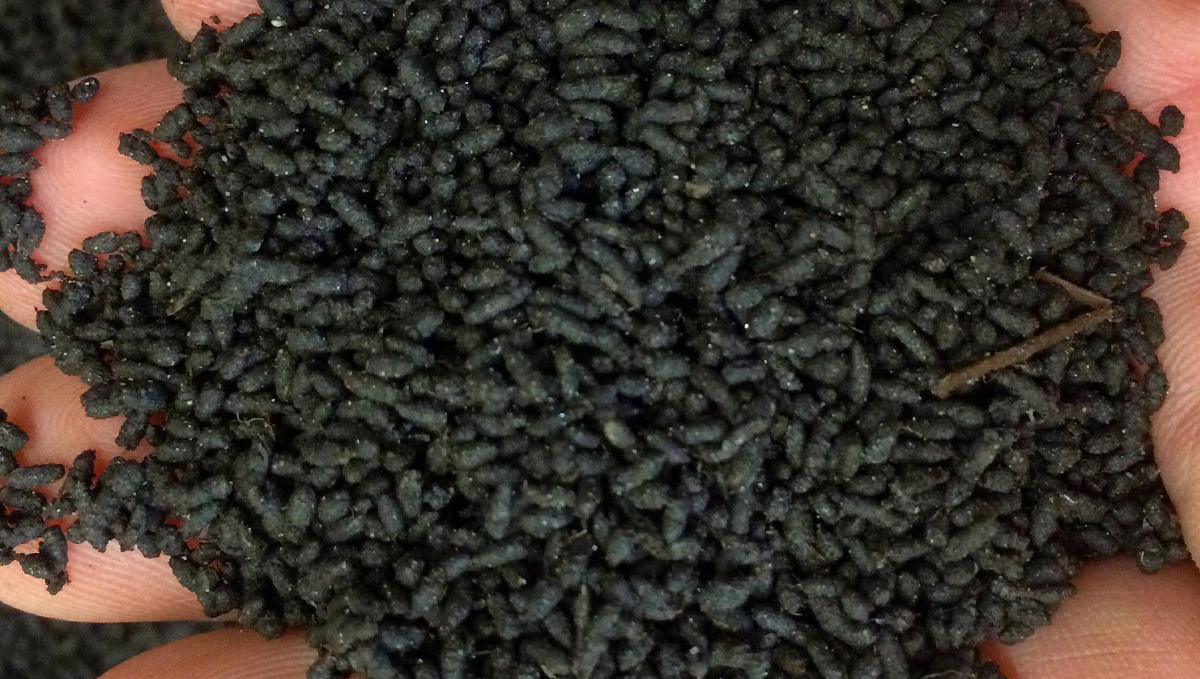
- Organic worm castings
This method consists of pre-amending the substrate and then top dressing it every 2-3 weeks, this can change according to your growing conditions because a higher temperature can increase the speed at which your plants perform photosynthesis and the substrate may run out of nutrients earlier.
Also, some strains may need more nutrients than others so that’s where the worm castings come in; Worm castings provide a little amount of all the nutrients your plants will need to continue growing without deficiencies until it’s time for the top dressing.
Substrate
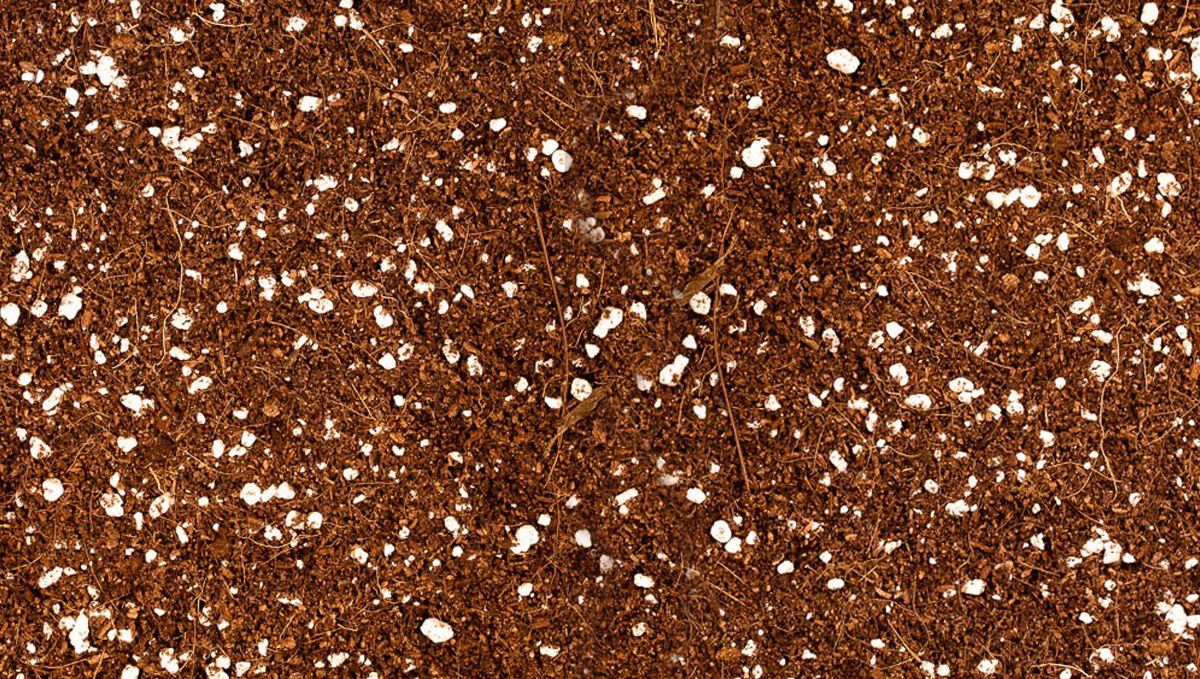
This type of feeding can be done in any type of substrate you prefer to grow in but for better results, we recommend using the following mix:
- Coco fiber 90%
- Perlite 10%
Now, as said before you can use whatever you want but this mixture has shown great results so this is what we recommend, obviously, you can and should experiment with other substrates that suit you better.
Have in mind that the percentage recommended below is based on the amounts described on the package by the manufacturer!
Vegetative stage (week 1 - 4)
This feeding schedule consists of using powdered nutrients so you have to pre-amend your soil with:
- 4-4-4 All-purpose fertilizer - 75%
- 2-8-4 Bloom fertilizer - 25%
After you’ve mixed the fertilizer in the soil you can go ahead and plant your auto seed in the pot for germination (or after it has germinated); These are slow-release amendments that take around 1 week for the nutrients to be available so they won’t burn your seedling.
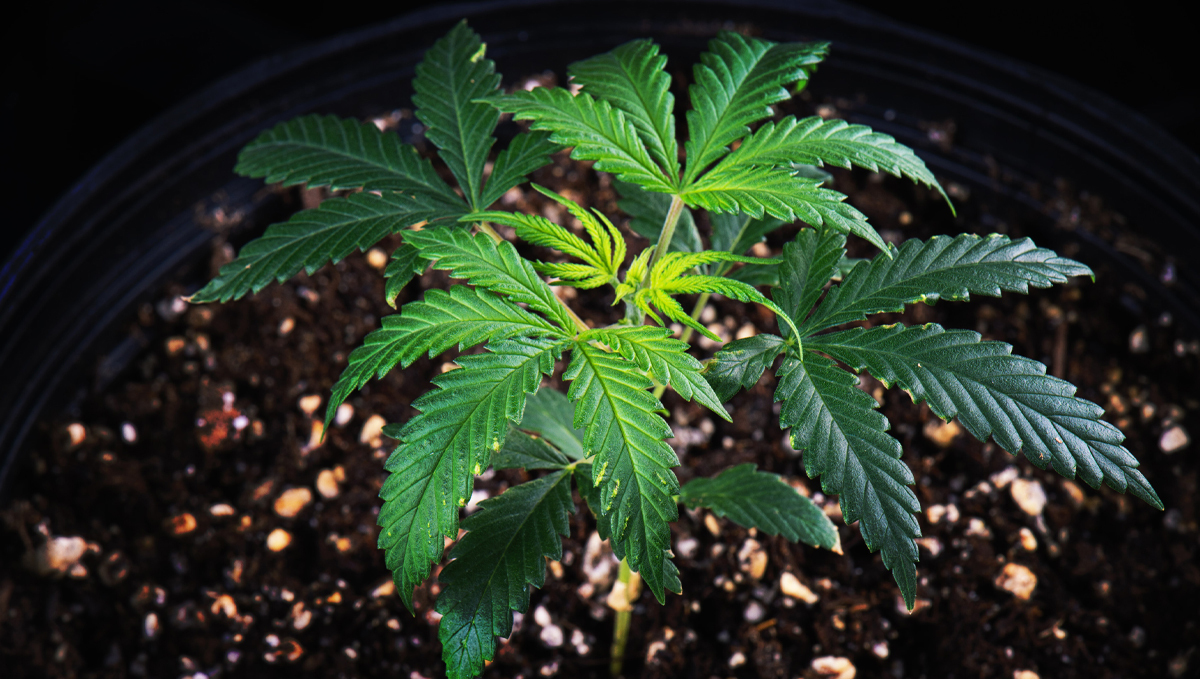
Remember that all cultivars are different so if your plants get hungry before the pre-flowering feeding you can go ahead and add the Organic worm castings as a top dress feeding, but it’s most likely that it won’t be needed with autoflowers.
Pre-flowering stage (week 5 - 8)
Once the first white hairs have appeared, you can go ahead and top dress the substrate with:
- 4-4-4 All-purpose fertilizer - 50%
- 2-8-4 Bloom fertilizer - 50%
Have in mind that you have to rub the powdered fertilizer gently onto the soil until it mixes completely and after it’s all mixed, water so the fertilizer starts breaking down.
Flowering (week 8 - 10)
Two weeks before harvest time, (usually around week 8), it’s the moment to help your plant completely develop the buds. Here’s the feeding ratio that will help you:
- 4-4-4 All-purpose fertilizer - 30%
- 2-8-4 Bloom fertilizer - 70%
This final feeding will provide the nutrients needed for your plant to develop dense buds and finish the grow cycle without any problems.
Due to these fertilizers being 100% organic, flushing is optional but depending on which fertilizers you’re using you will have to flush to enhance the aroma and flavor of your buds.

Expert Opinion by Jorge Cervantes - co-author:
Nourishing cannabis plants, particularly autoflowering strains, is like orchestrating a musical masterpiece. Each nutrient has a role, synergizing with others to produce a peak of growth, health, and potency. Autoflowers, given their brisk life cycle, pose a distinct challenge. Their swift shift from vegetative to flowering stages means there's a limited timeframe to perfect their nutrition. Over my extensive career, I've encountered myriad feeding schedules, some triumphant, others less effective. The secret is discerning the plant's requirements at every phase and customizing the feeding strategy to match.
In this piece, we have aimed to outline a feeding schedule that's both thorough and flexible. It's rooted in tangible evidence, decades of direct experience, and a profound grasp of plant biology. However, it's essential to remember that while this guide lays a robust groundwork, the ultimate feeding schedule resonates with your plant's distinct demands. It's imperative to be attuned to your plants, decipher their cues, and modify your feeding strategy based on their feedback. This harmony between knowledge and instinct paves the way for genuinely remarkable yields.
I encourage you to immerse yourself in this guide, assimilate its wisdom, and employ it as a foundation for your cultivation endeavors. With the proper cannabis cultivation knowledge and a discerning eye, you can devise a feeding plan that propels your autoflowers to their zenith, resulting in rich and potent harvests. Cheers to the artistry and science of cannabis cultivation!
8. Nutrient overfeeding
Overfeeding is the result of a too strong solution, as said above, more nutrients don't always result in more growth and some plants are more sensitive than others.
When you don't measure the dose of nutrients that go in your solution, you can overfeed your plants and they will surely show signs of toxicity. Even though it's a common problem amongst growers, the problems that come along are really serious and can end up killing your plants.

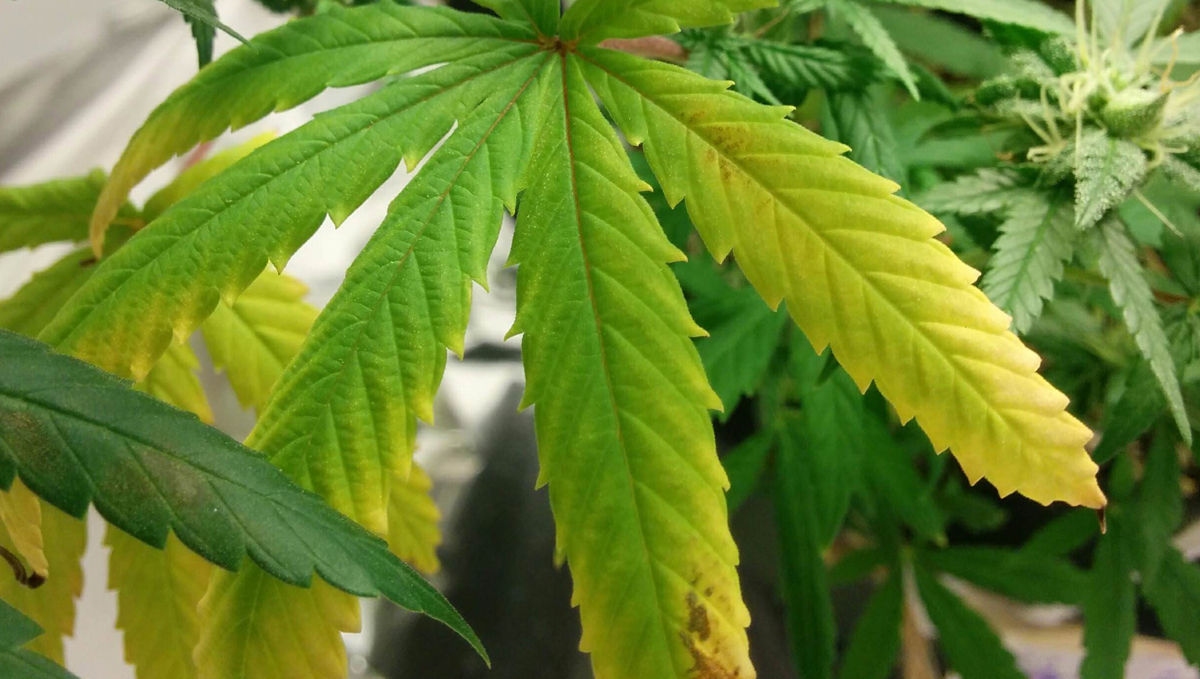
Signs of overfeeding are yellowing or yellow spots on the leaves and can be more serious if you don't fix it, if you continue to feed a strong solution the leaves will start to brown, get crispy and die, this results in a stressed plant which will grow slower, can end up producing lower yields and ultimately die, so if you see signs of toxicities you should flush right away, give your plant a couple of days to recover and start feeding again with a lower dose. Have in mind that you can easily avoid this by using our feeding schedule for cannabis above or just by simply using a lower dose than recommended and increase it gradually.
|
Nutrient Overfeeding Symptoms |
|
|---|---|
|
Nitrogen |
Greener leaves, weak branches, less water uptake. |
|
Phosphorus |
Burned tips, thin leaves, spots on leaves. |
|
Potassium |
Burned leaf tips, curling of lower leaves, spots on leaves. |
|
Calcium |
Stunted growth, wilting leaves. |
|
Magnesium |
Dark green leaves, stunted growth. |
9. Nutrient underfeeding
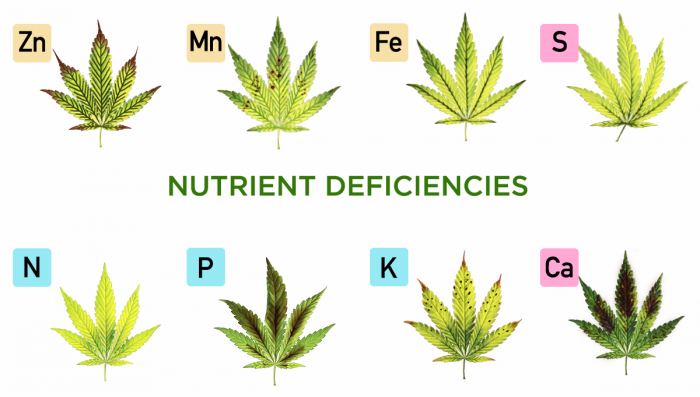
Underfeeding can also hurt your plants, if you fail to provide the nutrients your autos need to produce sugars they won't be able to grow and will show signs similar to the symptoms of overfeeding. Even though some plants can grow well without nutrients, it's recommended you provide at least a minimum amount to make sure your harvest meets your expectations.
Remember that nutrients are extremely important so even though you may be afraid of overfeeding your plants, there's no need to be, it's normal for beginner growers to burn plants, even more experienced growers can burn plants when they're trying a new nutrient brand so don't worry.
Just make sure you learn from your mistakes and try to adjust the dose until you reach the optimal amount.
|
Nutrient Underfeeding Symptoms |
|
|---|---|
|
Nitrogen |
Leaves turn yellow, curled leaves, small leaves. |
|
Phosphorus |
Dark spots on leaves, curled leaves, slow growth. |
|
Potassium |
Weak branches, rusty color on leaves, slow flowering. |
|
Calcium |
Curling on lower leaves, slow flowering, yellowish-brown spots on leaves. |
|
Magnesium |
Dried out leaves, rust spots on leaves, sickly appearance. |
10. Flushing and when to stop feeding
Flushing consists of washing the excess nutrients from the roots and medium 1-3 weeks before harvesting. As you may know, all cannabis plants absorb nutrients to grow, when a plant absorbs nutrients there can be a nutrient build-up, although this is more common with synthetic nutrients, it can also happen with organic nutes. Failing to flush properly can easily affect your buds, usually, plants that have not been flushed have a less potent smell and are harsher to the throat so if you want the flavor and smell of your buds to stand out, and smoother smoke, we recommend flushing with plain water or flushing products which can be found in grow shops.
11. The Best Cannabis Nutrient Brands
Thanks to the current wave of cannabis legalization, the list of brands producing top-class nutrients for cannabis cultivation is only getting bigger. And while having a huge range of options is never a bad thing, it can make choosing the right nutrient for your to grow a little tricky. Which brand is best? Which additive will make those buds drip with sticky-icky goodness? Let's take an in-depth look at the leading brands, and all the best products currently available!
Advanced Nutrients
Advanced nutrients have been around since 1999, and to say they have dominated the market would be just a slight understatement. A true driving force behind nutrient evolution, they’ve developed some of the most innovative nutrient formulas the industry has seen to date, and are constantly working on new products to ensure the best possible outcomes for all styles of cannabis cultivation. They took out the top awards for the Best Cannabis Nutrient Brand 2022 from the growers at Grow Diaries. This is one of the most prestigious awards that a nutrient company can take out, as it is voted on by a huge user base - Grow Diaries is the largest grow journal website, and the awards are open for voting by all who post on the site. Sure, awards handed out at cannabis competitions such as The High Times Cannabis Cup and the like may come with a certain sense of reverence, but user-based awards give us an insight into what the cultivation community as a whole really thinks. Advanced Nutrients also won Best Nutrients 2022 at Spannabis - Spain's biggest annual cannabis competition.

They focus on providing the best in cannabis nutrients, with the full range backed by science-based research. They were the first nutrient company to partner with a university (the University of Mississippi) and dive deep into the genetic potential of cannabis. Their nutrient lines are focused on optimizing nutrient delivery through a variety of products, from their flagship 3-part nutrient line, Big Bud, Bud Ignitor, and Bud Candy - to their Voodoo Juice nutrient line which specifically targets microbial life in your root zone. It should come as no surprise that these nutrient lines brought Advanced Nutrients to the top of the nutrient market. They are constantly innovating, and remain the nutrient of choice for many professional growers.
Ultimately, Advanced Nutrients is an amazing nutrient range backed by science and research and is a great nutrient choice for any grower. Whether you are looking to take your first steps in nutrient use, or are an experienced grower looking for the best nutrient lines, Advanced Nutrients is certainly a nutrient line to consider.
Canna Nutrients
Canna is another nutrient company that has been around since the beginning and has been making nutrient lines for almost as long as Advanced Nutrients. Canna nutrient lines are specifically designed for optimum nutrient delivery, and they focus on providing the best possible nutrient formulations to help promote maximum nutrient uptake and nutrient uptake efficiency. As well as their nutrient lines, they offer a range of growing mediums and additives to help your nutrient setup. Canna nutrient lines are specifically designed to work together, and when used together with their grow mediums and additives, they provide nutrient delivery that is second to none. Their nutrient lines are backed by science and field testing, and they have developed nutrient formulas specifically for cannabis cultivation.
Canna nutrient lines are a great nutrient choice for cannabis growers, as their nutrient formulas are specifically designed to help promote maximum nutrient uptake and nutrient uptake efficiency. This means that your plants will be able to optimally utilize all the nutrients available in the nutrient tank, which will result in bigger yields, better quality buds, and improved nutrient efficiency. Therefore, Canna nutrient lines are definitely a nutrient line to consider when it comes to nutrient choice for cannabis cultivation. The nutrient lines are backed by science and field testing, and they provide nutrient delivery that is second to none. Additionally, they offer a range of growing mediums and additives that can help your nutrient setup.
Canna nutrient lines are an almost guaranteed way to maintain your cannabis plant properly feed both in terms of nutrition and efficient delivery.
Fox Farms
Providing nutrients and substrate since 1984, Fox Farms is one of the original companies that have helped thousands of cultivators all around the world. Originating from Humboldt County, Pacific Northwest, Fox Farms created a revolutionary product for cannabis cultivators at that time. The unsterilized soil blent designed for cannabis plants was a much appreciated novelty.
Fox Farm offers a wide range of nutrition-oriented products for the cannabis cultivation process. Their articles vary from additives and supplements for an extra efficient nutrition, nutrients and even excellent soil and coco-coir based applications. The products provided by Fox Farm are truly one of the best choices for cannabis growers, especially because they’ve been tested and proven on thousands of occasions. The international footprint of Fox Farms can be seen on the territory of the biggest producer of cannabis in Europe, Spain. As the highest-selling nutrient company, it’s easy to understand where its quality stands.
General Hydroponics
Just as the name suggests it, General Hydroponics is the company that built the foundation of hydroponic configurations. The products provided by this company have been among the best on the market thanks to the facility and advantageous results they offer.
General Hydroponics created a nutrient line that’s excellent in both delivery and efficiency. The nutrients were developed following scientific principles that allow the creation of products with an extremely fast nutrient delivery and a high quality composition. The amount of care and precision put into their nutrient lines are a great choice for any cannabis grower who wants to give their plants only the best. Moreover, the additives and the vast range of growing mediums provided are what any grower needs to get the best out of their autoflowering strains.

House & Garden
Another original, House & Gardens is among the oldest nutrients companies out there. Their main purpose is to create excellent nutrients for cannabis plants. It all began in 1900, when Willian Van De Zwaan, horticulturist, applied scientific methods to rose breeding. The successful experiment made House & Gardens the main roses supplier of the Vatican. After 25 years, they directed their efforts towards cannabis nutrients. Now, we can confidently say that House & Gardens provides one of the top nutrients and additives out there.
Besides offering some of the best nutrients on the market, their delivery and the feeding schedules are unmatched. These can be personalized based on the needs of your cultivar at any time. Moreover, the growth stimulators, like Roots Excelurator and Shooting Powder were awarded for their efficiency and quality.
House & Gardens is a constant in our production. We constantly gravitate towards the pre-buffered coco substrate mix, and, some time ago, the House & Garden coco nutrient was a first for use. The products for coco-based growing are definitely on a level on their own due to the high quality and delivery. Another point goes to their starter kits for new growers. With everything a novice could ever need, they provide the perfect jumpstart for a great harvest.
One of the best things about the nutrient market is the amount of competition. The list is almost never-ending, and although the above five are our go-to's, there are just so many other options available to cultivators today.
OTHER GREAT OPTIONS
We could say the market is oversaturated with nutrients companies. The competition is never ending so, although we’ve mentioned our main preferences, here’s other good options to consider: Dyna-Gro, Botanicare, SHOGUN, Xpert, Kyle Hushman’s Vegamatrix and Cyco.
What we suggest is getting down to your local hydro supplier, and having a nice long chat about all the options in stock. The guys working and running these stores are usually extremely knowledgeable, and welcoming. They also usually have a nutrient scheme that offers discounts, so it might be worth stocking up with multiple products. Whichever nutrient line you choose to go for, make sure you do your own research and due diligence. Every nutrient will bring different benefits to the table, but ultimately each one is an investment in the future harvest of your plant.
12. In Conclusion
Autoflower watering should be taking with caution, not only autoflowers but all plants are different in one way or another. You can follow an autoflower nutrient schedule like the one we provided above but the optimal way to feed your plants is by understanding the environment you’re growing in and the cultivar you’re growing. Our Banana Purple Punch Auto, for example, is a sturdy grower and will do perfectly fine without nutrients.
But with proper usage and good quality nutrients, she will make absolute marvels. The amount of water and nutrients an autoflower needs depends on humidity, temperature, type of medium, air circulation, and genetics so we recommend spending a little bit of time with your plants daily. Paying attention to the little details and signs that your plant gives you, is where you make the difference between growing an okay plant and a beautiful, 100% healthy one. We promise she will give back by growing dense and very frosty flowers.

Comments