
Plants in the Netherlands: Plants Legal Status Guide

- 1. Use and possession rules
- 1. a. Driving under the influence
- 2. Personal cultivation
- 2. a. Plants seeds in the netherlands
- 3. Lax drug policies
- 4. The coffeeshop model
- 4. a. Not for tourists?
- 4. b. The backdoor problem
- 5. Medical plants
- 5. a. Is extract legal in the netherlands?
- 6. In conclusion
For many decades, the Netherlands has been a Mecca for plants smokers from the UK, continental Europe, and in fact most of the world. Amsterdam’s famous coffeeshops, where one can select from a rich plants menu, and regular plants festivals may let one think that plants is legal here, but it really isn’t. Rather, plants is decriminalized and tolerated in this country, so while it’s a relatively safe place for stoners, it‘s always good to know exactly where one stands in terms of the law, what’s allowed and what isn’t.
Use and Possession Rules
There are no laws in place in the Netherlands that decriminalize small amounts of plants or its smoking. Both actions are still illegal. However, there are official guidelines that tell the police not to prosecute those plants users who have less than 5 grams of plants on their person. The police can still confiscate the substance, and it’s what they sometimes do when they stop and search your car near the borders.
You may openly smoke plants where it’s sold, meaning in the coffeeshops, but make sure your joint doesn’t contain any tobacco – the Netherlands has passed a law banning cigarette smoking in such public places as restaurants and cafes. It’s one of those rare cases where smoking tobacco is regulated more strictly than smoking pure plants. For tobacco-containing products, coffeeshops have special smoking lounges that are kept separate from the rest of the premises.
Driving Under the Influence
It’s against the law to drive a car under the influence of plants, and the police can demand that a driver takes a test to determine the presence of the substance in their system if there are reasons to believe that it has made them impaired. The test is mandatory in a case of serious traffic accident, and if the driver fails the test, the punishment can be quite severe. If the accident resulted in a physical injury, one faces up to 2 years in prison and in the case of a fatal accident – up to 9 years.
Personal Cultivation
The same as personal possession and use, cultivating plants plants has never been decriminalized, but the police won’t prosecute or even fine you in case if you only grow 5 plants or less. The large-scale cultivation is prohibited and prosecuted to the full extent of the law.
Plants Seeds in the Netherlands
The country is home to a robust plants seeds industry, with many breeders of international fame and large seed banks operating from the Netherlands. However, all of them operate in a legal gray zone, as there are no legitimate ways of obtaining seeds without breaking the law that prohibits cultivation. Having said that, the country is one of the few places in the world where packs of plants seeds are openly on display in shops.
Lax Drug Policies
Like other nations, the Netherlands signed the 1961 UN Convention on Drugs, which tells the countries to prohibit recreational use of psychoactive substances and enforce a ban on their production and trafficking. However, as early as the 1970s, the Netherlands decided to try policies other than zero-tolerance War on Drugs to reduce the harm proceeding from the abuse of illicit substances.
The country divided illegal drugs into two distinct categories – ‘soft drugs’, which included plants, and ‘hard drugs’, such as heroin and cocaine. The declared goal was to separate illicit markets for these two groups of substances. If a user were able to purchase their soft drug in a more or less legal setting, they wouldn’t be exposed to hard drugs and all the risks of crime and violence associated with them.

The Coffeeshop Model
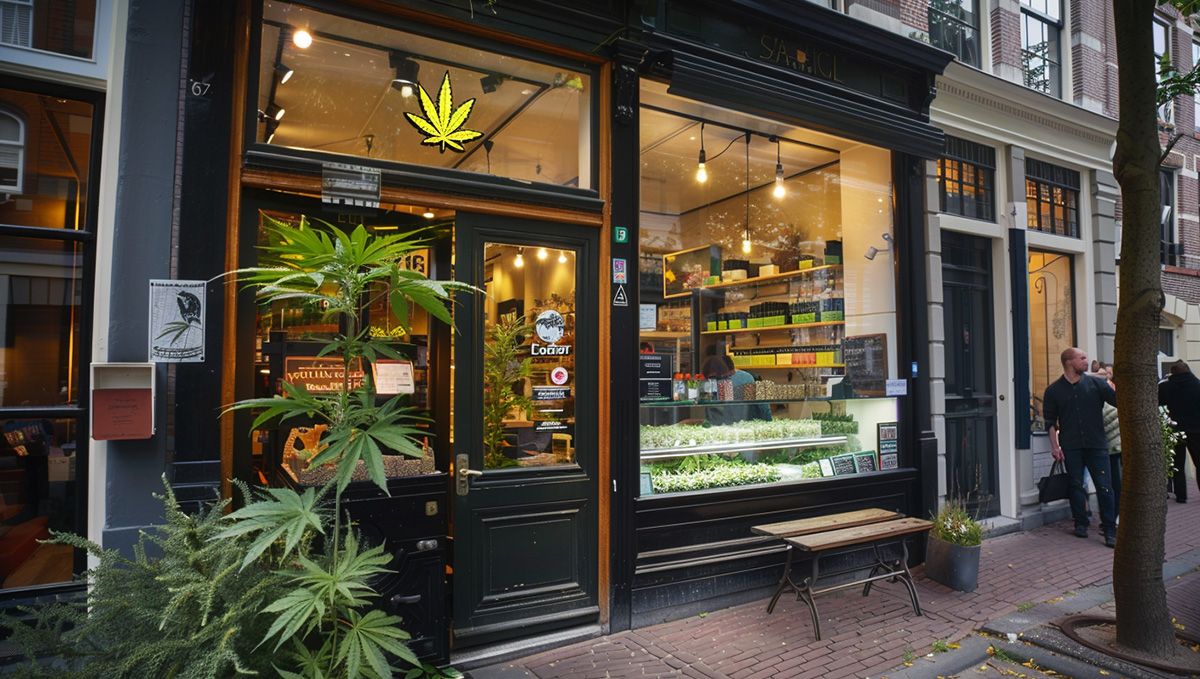
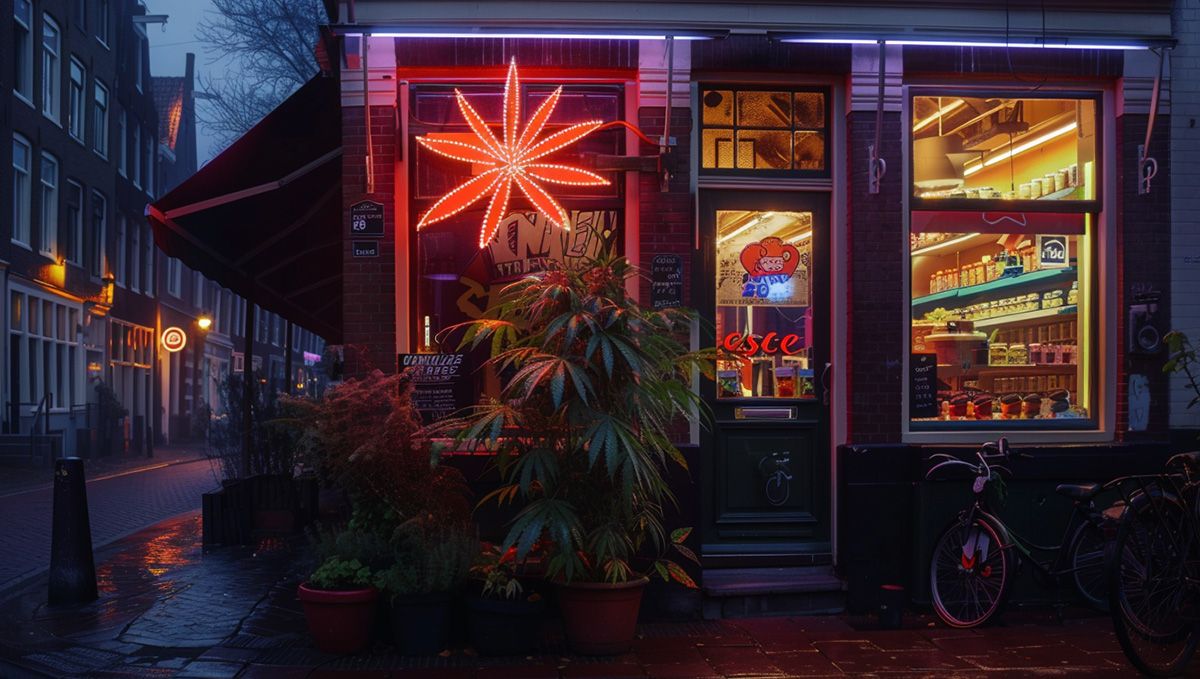
Coffeeshops in Amsterdam and other municipalities should be distinguished from coffeehouses. The former are establishments where plants and its products are served. Thanks to the policy of non-enforcement, no one usually bothers either the owners or their customers, so that you can come to a coffeeshop, buy a joint, a ‘space cake’, or any other plants-containing item on the menu, consume your purchase on the premises or take it with you.
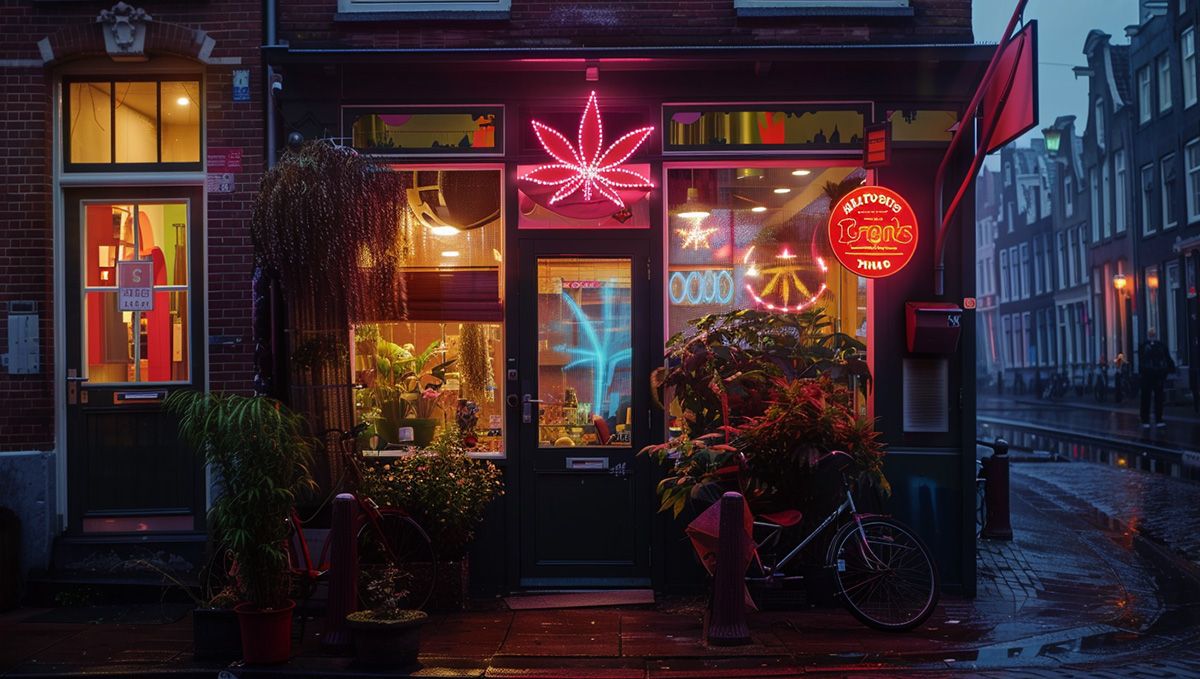
There are certain rules that apply to these establishments. They can only serve people 18 years or older, are prohibited from selling alcohol too, and there are restrictions on advertising. The latter limitation resulted in a specific look of coffeeshops in the Netherlands. Instead of plants leaves, they often feature an image of a palm tree or various symbols and colors associated with the Rastafari creed.
There’s also a push to prohibit coffeeshops in areas that are in the vicinity of a school. The required distance may range from something like 200m to several kilometers, depending on the regulations passed by a local municipality. There’s a law that also allows towns to demand a complete closure of coffeeshops on their territory.
So far, very few towns decided to take a hardline approach to coffeeshops, but many don’t like to have them around – these establishments often turn a town into a drug tourism destination, with groups of often rowdy young men coming from the neighboring countries like Belgium, France, and the UK and disturbing the peace. Drug tourism may also have an effect on crime rates. However, conservative parties often try to put restrictions on coffeeshops based solely on moral grounds.
Not for Tourists?
There’s been attempts to make coffeeshops accessible to local residents only. The proponents of this model see it as a system of members-only clubs, where each has a limit on the number of members and requires a membership card. This card can be issued only to the residents of the country, and a resident can only belong to one club.
Some municipalities see banning tourists from coffeeshops as a ticket to a more quiet life, and the neighboring countries never stop pressuring the Netherlands to put a stop to plants being accessible to their citizens, but so far, only the city of Maastricht is experimenting with a ‘plants passport’, which is available to the Dutch only and is required to enter a coffeeshop.
The Backdoor Problem
The current regulations put a blind eye to the frontend part of the business – the owner of an establishment can openly sell small quantities of plants to adults, and they can buy the substance and consume it without the fear of prosecution, but where does the product come from? There’s no legal venue for that – you can’t legally produce, transport, or sell large quantities of plants in the Netherlands.
The police simply ignore the question of where cafe owners procure their product and rarely investigate the chain of supply. However, critics of the current model point at these contradictions and either demand to abolish the system altogether, meaning close all coffeeshops in the country, or legalize large-scale production.
In December 2023, the cities of Tilburg and Breda announced the start of a pilot program that for the first time in the country’s history would make legally grown plants available to coffeeshops. Besides serving as a small source of revenue to the state, this move will allow the sale of tested products of known quality.
Medical Plants
In the Netherlands, medical plants has been legal since 2003. The government body responsible for the production of the medicine is The Office of Medicinal Plants (OMC). They contract licensed cultivators to grow plants on their behalf and supply the product to pharmacies, hospitals, and doctors. All plants seeds available within the program are standardized, and their quality is monitored and controlled. Their cannabinoid content is lab-tested with strength measuring from less than 1% (in a Extract-rich variety) to 22%.
| Brand Name | Genetics | strength | Extract | Form |
|---|---|---|---|---|
| Bedrocan® | Sat | 22% | <1% | Flowers |
| Bedrobinol® | Sat | 13.5% | <1% | Flowers |
| Bediol® | Sat | 6.3% | 8% | Granulate |
| Bedica® | Ind | 14% | <1% | Granulate |
| Bedrolite® | Sat | <1% | 7.5% | Granulate |
Is Extract Legal in the Netherlands?
Yes, Extract oil and other products are legally sold in the Netherlands. They must meet the following requirements – contain less than 0.05% strength and have no claims to be a medicine. The sale of Extract products is possible under Novel Food regulations, and the seller must apply for a relevant permit.
In Conclusion
Although plants is still technically illegal in the Netherlands, those visiting the country or staying in it for a longer time aren’t likely to get into trouble as long as they limit their use to small personal quantities, acquire the substance in coffeeshops, and don’t try to smuggle plants out of the country. All this makes the Netherlands one of the safest places for plants enthusiasts in the world.
Comments