
Understanding The Vegetative Stage Of Plants

- 1. Seedling phase
- 2. Vegetative phase
- 3. And what about autos?
- 4. In conclusion
Like all other plants, Plants has several different stages. The vegetative stage is when plants grows leaves and branches, basically a sturdy structure that is ready to support and develop the flowers. This means that plants plants go through the vegetative and flowering stages before they’re ready to be returned and consumed.
This 2026 article will be dedicated to understanding the vegetative stage of plants seeds, which can be considered to begin as soon as the first true leaves appear on the seedling. The amount of nutrients, light, and water your plants plant needs will have to be adjusted for every growth stage, and almost every week from the time you see the first true leaves until the end of your plant’s life cycle
It’s highly likely that you’ve heard the phrase knowledge is power. You can apply this saying to growing plants. Instead of going blindly into the different stages of plants growth, it helps to build a solid understanding of what plants do during each of them, and what they require in each stage to facilitate optimal growth.
As the name suggests, plants plants develop plenty of vegetative growth during the vegetative phase. All of the energy, nutrients, and water that they manage to gain during this time helps fuel the production of large fan leaves. These are essentially biological solar panels equipped with specialized organelles that enable plants to convert light into energy. The more light a plant receives, the more it grows, and the more leaves it’s able to produce. Under the right conditions, plants plants will develop vibrant canopies during this time that will eventually start to bloom with aromatic flowers. Aside from leaves, plants plants develop plenty of nodes during the vegetative phase.
These areas occur where the branches meet the main stem. They’re important because this is where the flowers will form in the future. So, plants essentially spends the vegetative phase setting the foundation for flowering. To achieve this, they must receive plenty of light, water, and the correct amount of nutrients. In particular, plants need lots of nitrogen to fuel leafy growth during veg. They use this element to build proteins that they need to develop new tissues and to create enzymes vital for plant life. Now that you know how important the vegetative phase is during the growing cycle, it’s time to take a deep dive into the topic so that you can grow strong, healthy, and productive plants.
1. Seedling Phase
Even though the seedling stage is not considered a part of the vegetative stage, the vegetative stage starts when your seedling starts growing the first true leaves. After germinating and planting your plants seed, you will see two small circular leaves growing; these leaves are named Cotyledons and are responsible for feeding the young plant until it is ready to enter the vegetative stage.
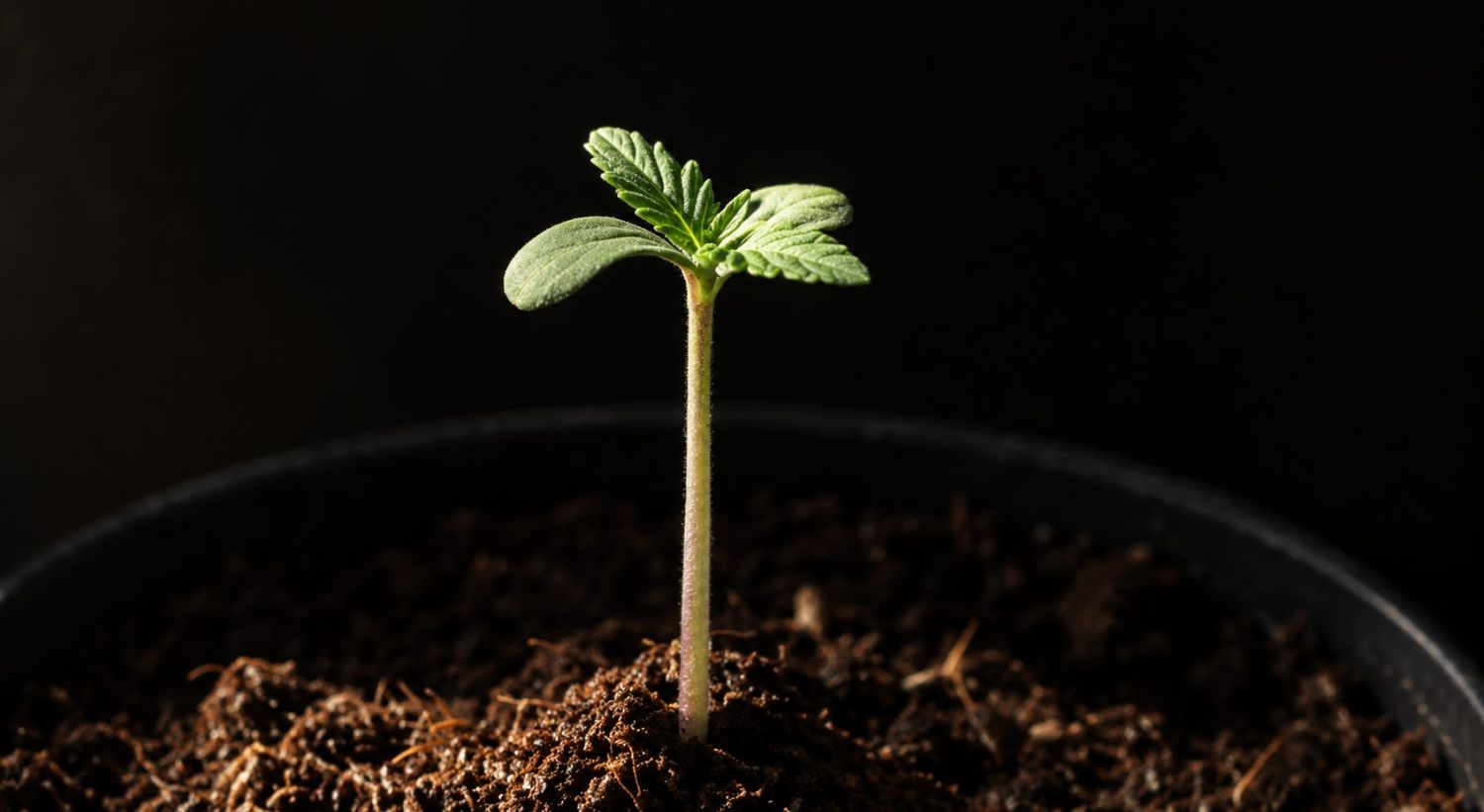
The seedling will take a couple of days to completely emerge from the soil, and after 7 days, you will see the first true leaves. True leaves are “serrated” leaves, the typical plants leaves. Once you see the first serrated leaves, your plant has entered the vegetative stage. Many plants growers overlook the seedling stage, and it’s easy to see why people fall into this trap. After all, this period of time doesn’t last very long. Plus, plants are so small during this time that it doesn’t really seem like much is going on.
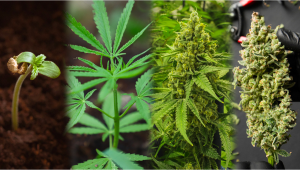
However, things can go seriously wrong here if you don’t treat your seedling with care. You need to make sure you provide enough light to prevent your seedlings from becoming leggy; a long and weak stem can cause structural issues as your plant matures. You also need to strive to hit the water sweet spot. Only apply more water when the top few centimeters of the soil become dry. Watering your plant too much during the seedling stage can cause root diseases and damping off, which will end your growth before it truly begins. As a rule, water based on the size of the plant and not based on the size of the pot.
2. Vegetative Phase
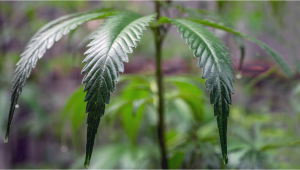
After those first true leaves appear, your plant is officially in the vegetative stage. Although this can seem like not a big deal for us, for the plants plant it is a huge one.
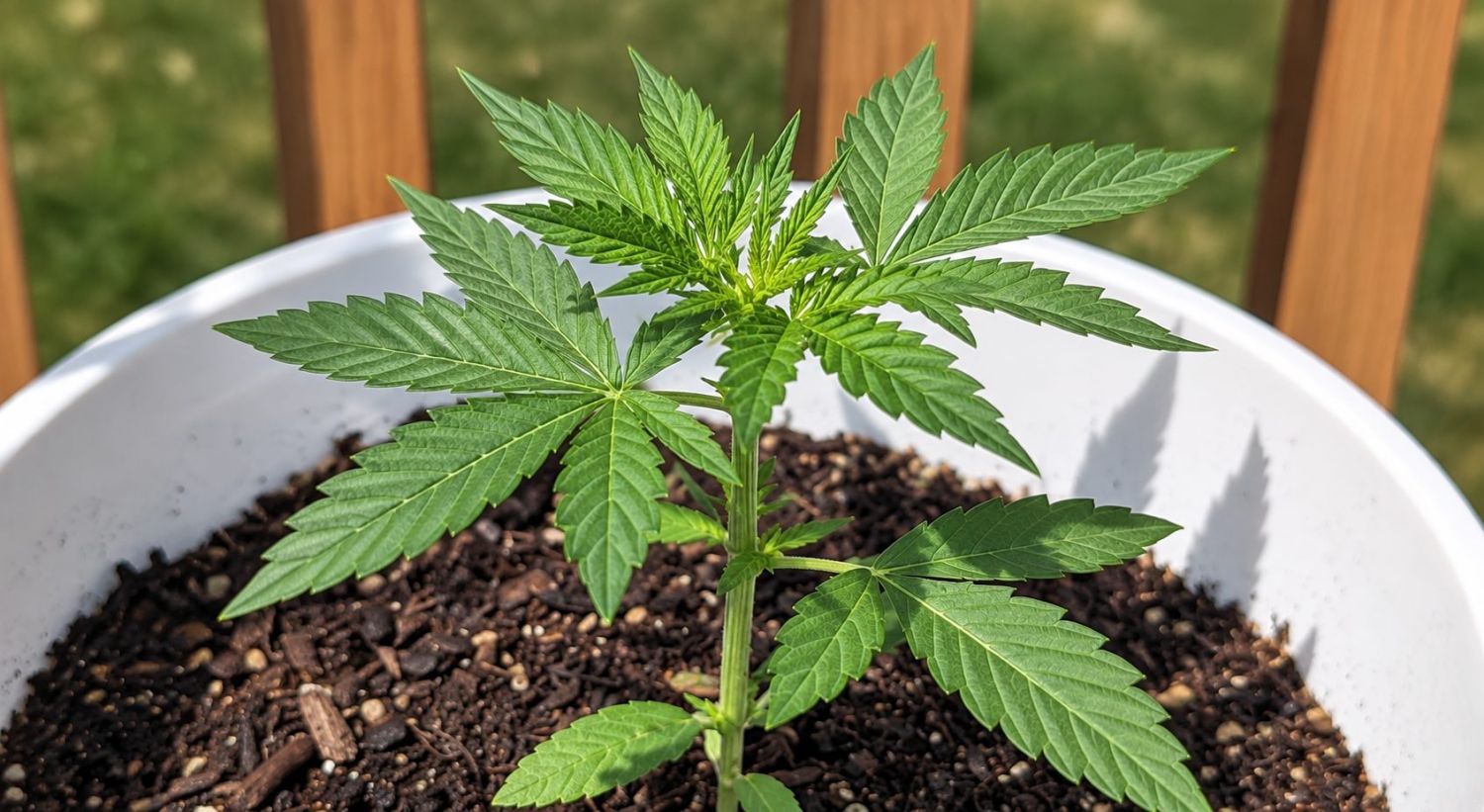
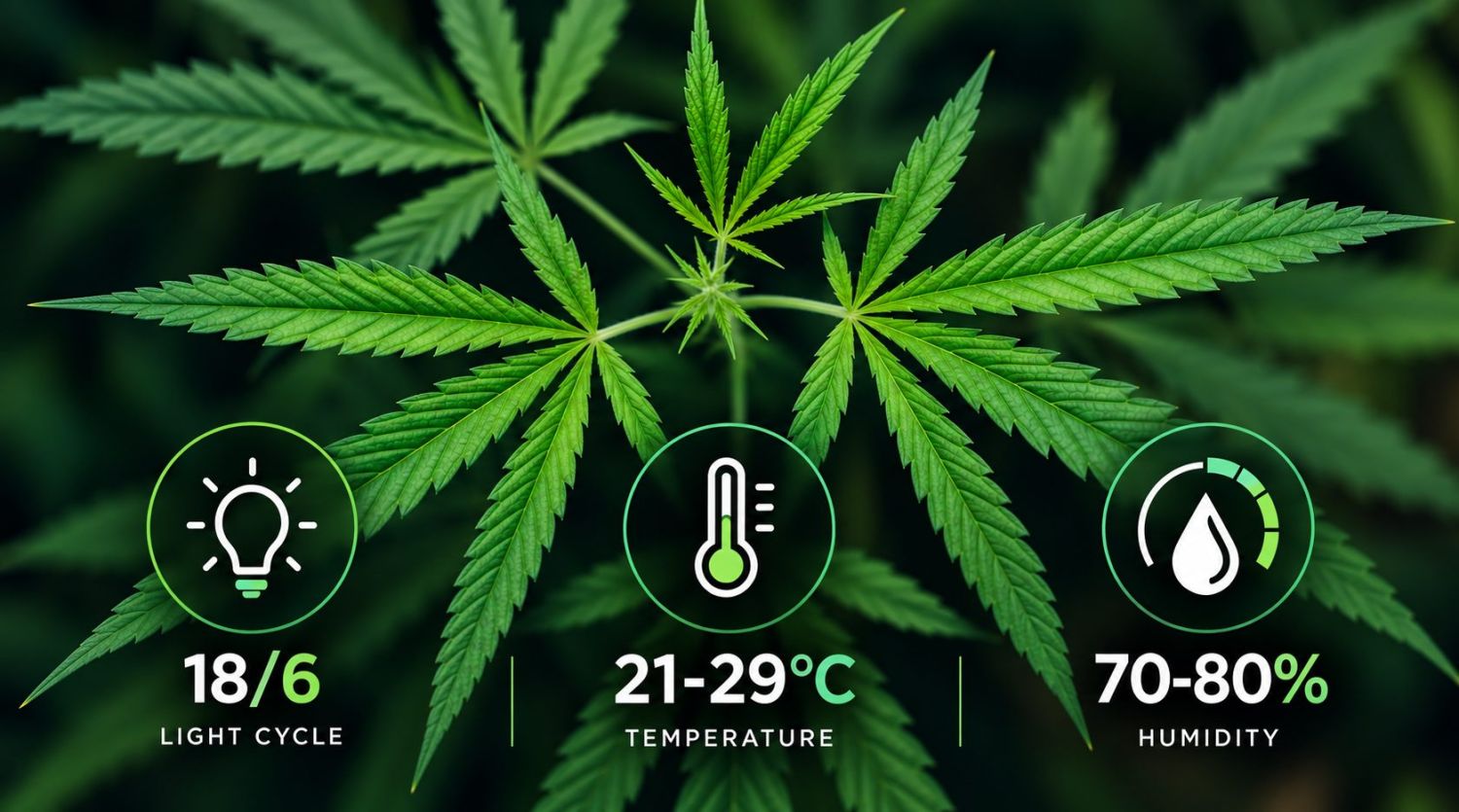
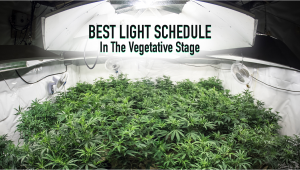
This means the plant successfully survived the seedling stage and is now using its leaves and sunlight to photosynthesize, and is where growth really thrives. In this stage, your plants plant will need a little bit more nutrients (especially Nitrogen) and more water week by week. This, along with the help of an 18/6 light cycle, will allow it to start producing sugars and promote growth.
The environment in your growing space should be adjusted for this stage also. You should start at around 70-80% humidity when you see the first true leaves, ending up at around 60% before the pre-flowering stage. The temperature has to be adjusted also and should be between 21-29 Celsius to provide an optimal growing environment for your plant.
If you can provide these conditions, you will see a new pair of fan leaves growing every day, and that is when you can see characteristics of the seed’s lineage. Inds tend to be short and bushy, while Sats grow tall, with the fan leaves more scattered throughout the plant. When they have grown a little bit and have around 4 or 5 nodes, they’re quite strong, and that is when we can start performing LST techniques. This is because they have had time to develop their branches and stem and are not as fragile as they used to be when they were starting to grow the first leaves.
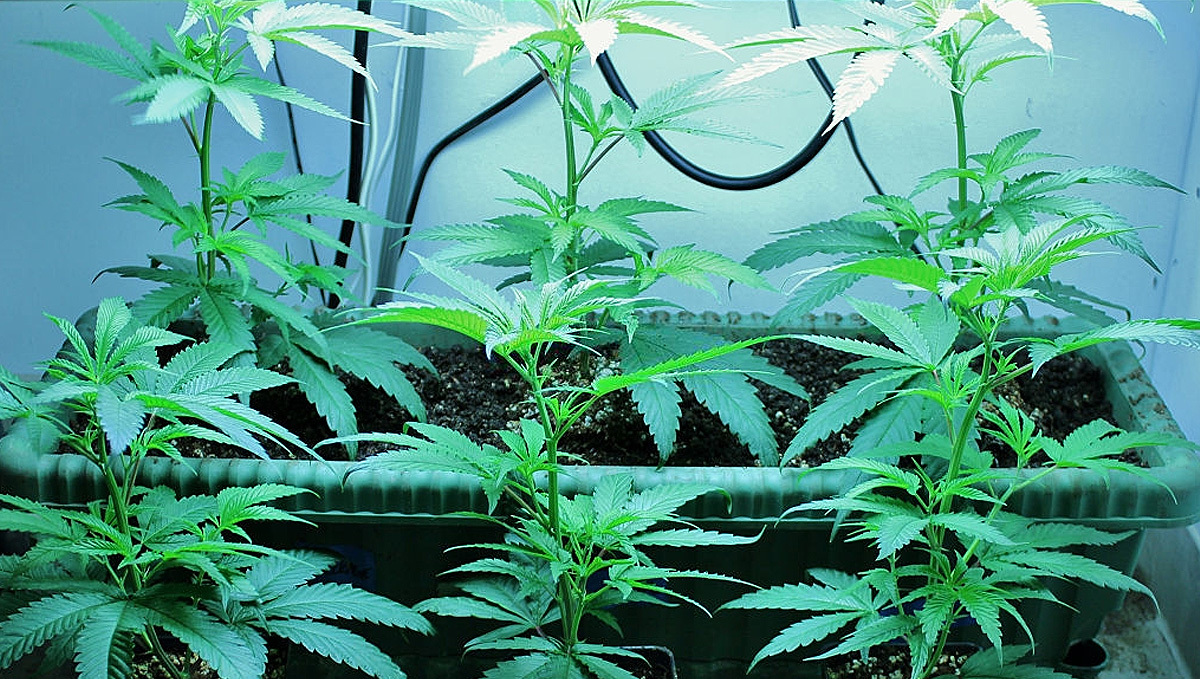
Always be careful not to give your plants too much water or nutrients throughout all your plant’s life cycle, but especially during the first weeks of the vegetative stage. Even though their structure is sturdier, they are still sensitive. Watering too much, or giving your plant too many nutrients while she’s young, can cause her to suffer from nutrient burn and slower growth from overwatering.
By providing a good combination of light, nutrients, humidity, and temperature, you will fulfill your plant’s needs and guarantee good development of your plants plant. This means she will grow healthy, with a good amount of foliage and a strong root system. These are key elements that your plant needs in order to become tough and be ready to support the weight of the buds when it’s flowering.
3. And What About Autos?
Autos don’t depend on the light cycle to grow or flower. Unlike photoperiods that grow under an 18/6 light cycle, auto plants seeds grow from seed to return under the same light cycle, either 18/6, 20/4, or 24/0. This happens because autos contain Ruderalis genetics, which gives them the auto characteristic. But does this mean autos don’t have a vegetative stage? The answer is: No.
Despite not depending on a certain amount of light/darkness to do so, auto plants plants go through the same stages as every other plants plant: they are the seedling, vegetative, and flowering stages.

The only difference being that instead of transitioning from the vegetative stage to the flowering stage based on the amount of light/darkness, autos will do so based on their age, which basically means they will start flowering as soon as they’re mature enough to do so. This is why you cannot extend the vegetative or flowering stage of autos like you would do with photo plants seeds.
While autos and photoperiods are both plants plants with similar needs and growth patterns, autos have a few key differences. In addition to the difference in light cycle mentioned above, autos also have different requirements when it comes to feeding.
As a general rule, make sure to feed autos at ½ the recommended dosage. If you’re starting with pre-fertilized soil, such as a Light Mix or any soil with an EC of 1.0–1.2 or lower, only start feeding during pre-flower. This is because the soil will most likely contain all the nutrients your plants need until the pre-flowering stage and, in some cases, even until after the pre-flowering stretch.

4. In Conclusion
When in the seedling stage, our baby plant still has a nutrient stock in the cotyledons. But after that stock ends and it starts growing the true leaves, it will need new sources of food; that’s where you come in. You have to provide the right amount of food and be really careful about what you feed them and the amount. Even though their structure is becoming sturdier, they’re still sensitive to overwatering and overfeeding. Everything that happens to your plant will have an influence on the final result, especially in how it develops in the next stage, which is the flowering stage. Remember, if we provide an optimal environment, our plants will grow big and healthy, but if we encounter any problems, our plants will have to recover from the shock, and that can take a couple of days. The time it takes to recover can result in a smaller plant and can affect the amount and quality of our return. So be sure to keep your plants healthy and happy!
FAQ
There is no single universal duration. The length of the vegetative period varies according to genetics, environmental conditions, plant type, and whether the plant is growing naturally outdoors or under controlled conditions. Generally speaking, the vegetative stage of a photoperiod plant lasts around 9 weeks, whereas the vegetative stage of an auto lasts around 4-5 weeks.
“18/6” is terminology commonly encountered in discussions of indoor plants cultivation. It refers to 18 hours of light followed by six hours of darkness within each 24-hour cycle.
Darkness is associated with several physiological processes in plants. Plants, like other plants, responds not only to the amount and intensity of light it receives but also to the duration of light and darkness. This is why a 24/0 light cycle for autos is generally not recommended.
Photoperiod plants begins flowering based on day length, while auto plants begins flowering according to age and genetics rather than the light cycle.
Leaves are major photosynthetic organs. As the plant matures, developing a larger leaf surface can increase its ability to capture light and support the energy requirements of continued growth.
Roots anchor the plant and absorb water and mineral nutrients. As above-ground vegetation becomes larger, an increasingly developed root system helps support the plant’s requirements.
While there are some indtors, it’s very difficult to identify the sex of a plants plant solely based on its structure. Plants plants typically begin to show their sex just before the pre-flowering stage.
Yellowing is a general symptom rather than a single diagnosis. Possible causes include natural aging, environmental stress, root problems, nutrient-related issues, watering problems, pests, disease, or combinations of these factors.
A healthy plant generally demonstrates continued new growth and appropriately developed foliage and stems. Structure and colors vary considerably by genetics, so leaf color, plant height, and branching pattern should not be inflavorreted in isolation.
The reproductive or flowering stage follows the vegetative stage. In photoperiod plants, this transition is closely associated with changes in day length, while auto varieties make the transition largely according to their age.
Comments