
What Is Veganic Plants?

- 1. What is veganic plants?
- 2. Veganic vs organic
- 3. What to keep in mind?
- 4. Vegan living soil recipe
- 5. Keys to veganic plants
- 6. Veganic plants faqs
Most people are familiar with organic cultivation; however, a new concept is gaining popularity among plants cultivators—veganic plants. Just like dairy-free, vegan plants is becoming increasingly popular in the plants market. But what exactly is veganic plants? Simply put, vegan plants refers to growing plants without using animal by-products. Let’s see what that entails.
What Is Veganic Plants?
Veganic plants, or Veganics, is a method used by farmers where they avoid using animal by-products to cultivate their plants plants. This technique has been proven as beneficial thanks to the faster metabolization of the nutrients. In fact, the plants manage to process the nutrients in such a way that they use less energy for flavor, strength and compounds development. Moreover, this type of farming has also shown great improvements in terms of flavor and quality of the plants buds.
Veganics is a great method to help your plants with nutrient absorption. In this case, the plants have access to nutrients all the time, just like in nature so thanks to the bioavailability of nutrients, your plants will grow much better and produce higher returns.
Veganic VS Organic
In some ways, there’s not much of a difference between organic and veganic cultivation. Both methods strive to use clean products that lack chemicals and pesticides. However, the main difference stands in the fact that although in organic farming, farmers use nutrients and fertilizers from animals (guano, fishmeal and cow manure), veganics is solely plant based.
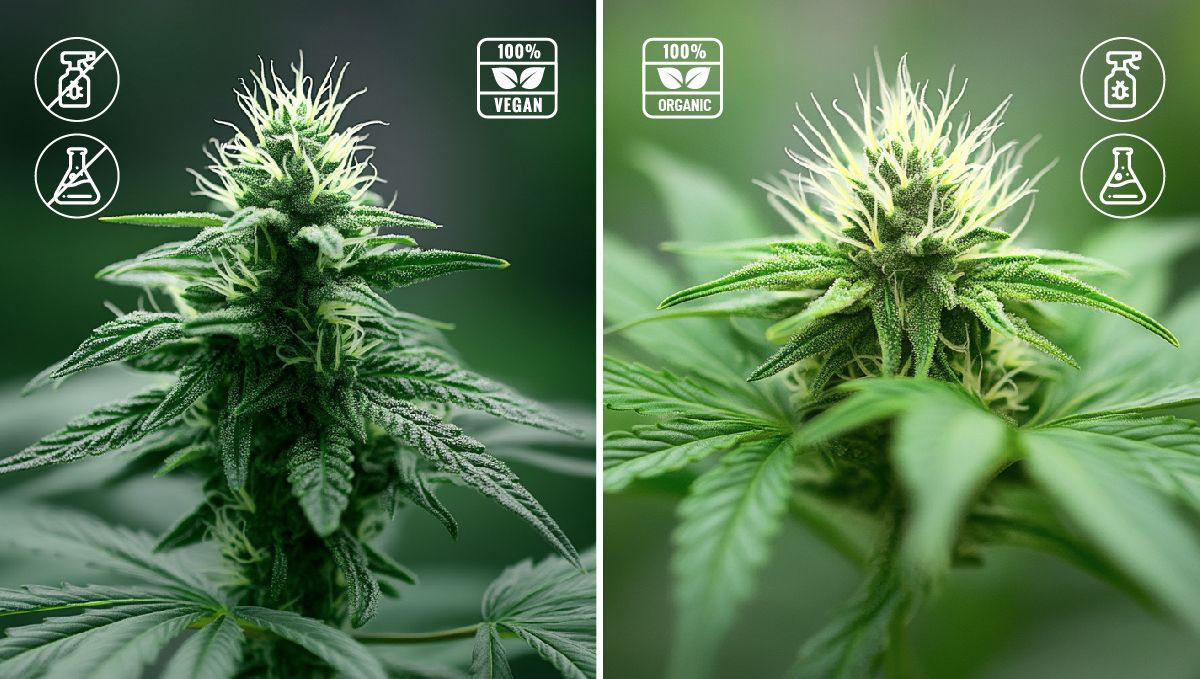
Veganics is chosen by some of the best farmers out there because it helps breakdown the nutrients much faster. Also, there’s less chances for your plant to have any signs of hormones, antibiotics and other damaging compounds usually found in animal by-products used for cultivation.
What to Keep in Mind?
You’re ready to revolutionize your farming and go to the other side? There are a few things you need to know about veganics:
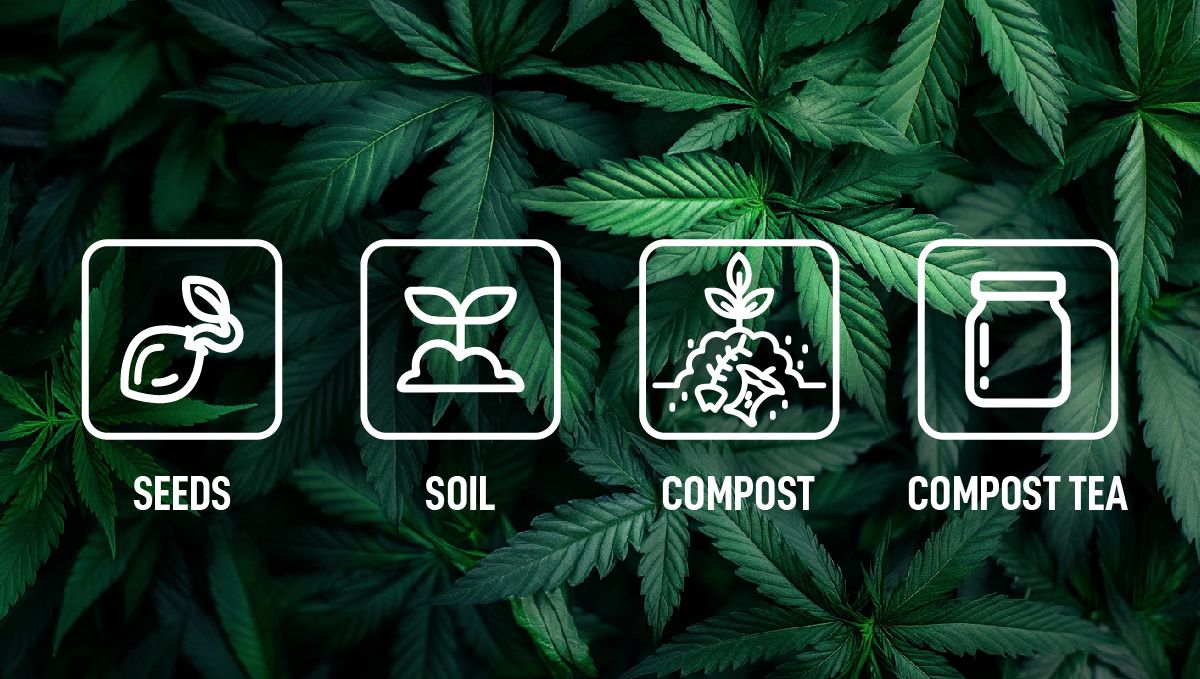
Seeds
Vegan plants starts with obtaining vegan seeds. Yes, you heard that right. In order to grow 100% vegan plants, you should look for breeders who specialize in vegan seeds. If you cannot find vegan seeds, high-quality seeds from reputable sources will work just fine.
Soil
For the substrate, it's recommended to use a store-bought soil mix or to make your own mix. However, ensure it contains beneficial microorganisms, or add them yourself by mixing in a mycorrhizae and bacteria inoculant.
Compost
In veganic, we use vegan compost instead of regular compost which main contain manure or other animal ingredients.
It may be difficult to find vegan compost and the composition may vary from one place to another, so we recommend making your own using dried leaves, wood chips, and twigs among other things. Remember to keep a 25:1 (carbon:nitrogen) ratio for ideal results.
Compost Tea
Compost teas are widely used in organic growing, and the same applies to veganics. However, you need to brew veganic compost tea with the same veganic compost mixed in the soil, make sure to add beneficial microorganisms to replenish the soil with life.
Vegan living Soil Recipe
Now that you understand a bit more about vegan plants versus organic plants, let’s dive into a recipe for veganic living soil. Keep in mind that the ingredients may be somewhat difficult to find depending on where you live. However, there are organic alternatives that will work just fine if you cannot find any of the mentioned ingredients.
Dry Ingredients
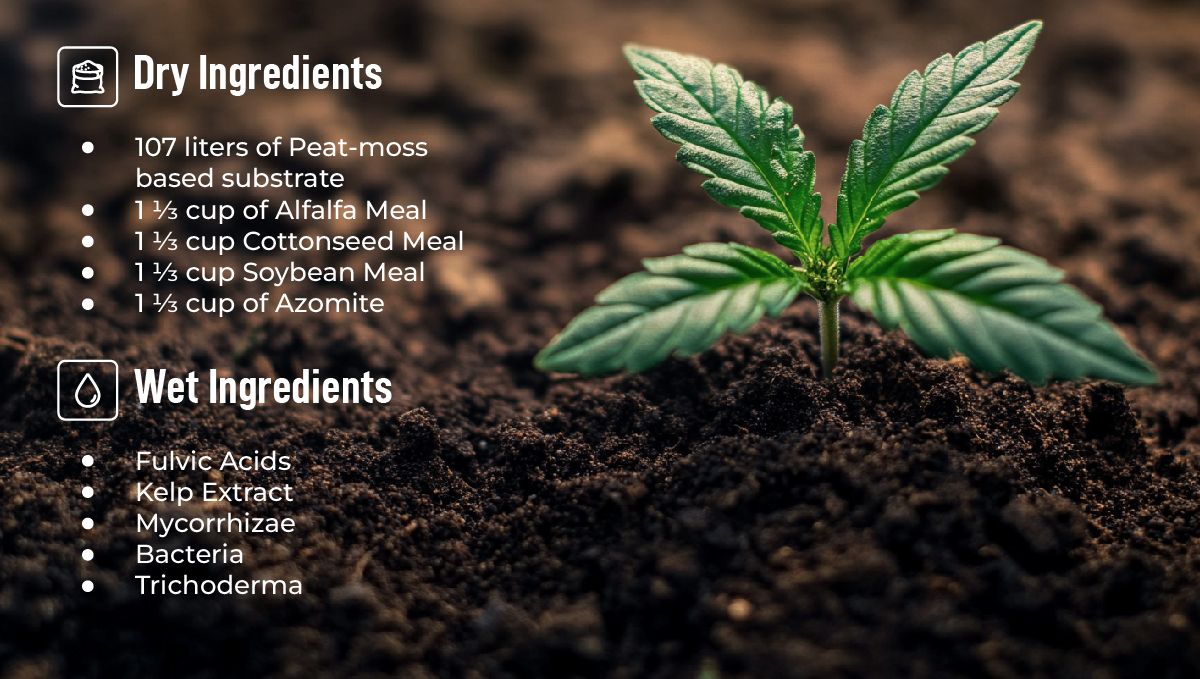
Starting with the soil mix, you will need:
- 107 liters of peat-moss-based substrate
- 1 ⅓ cup of Alfalfa Meal
- 1 ⅓ cup Cottonseed Meal
- 1 ⅓ cup Soybean Meal
- 1 ⅓ cup of Azomite
Now we need to add life to our soil to transform it into living soil by adding the wet ingredients.
Wet Ingredients (per 4 liters of water)
For our first watering, we need to add all the living microorganisms. To introduce these beneficial organisms, we’ll use the following:
- Fulvic Acids
- Kelp Extract
- Mycorrhizae
- Bacteria
- Trichoderma
There are better and less effective brands, but use whatever you have available. Just make sure to follow the instructions, and you’ll see mycelia forming in no time. By soaking the soil with the wet ingredients, you have successfully make you brown veganic living soil, however, that’s not enough to grow a plant from seed to return.
Maintenance
In order to keep the plants well-fed and healthy, make sure to incorporate all the wet ingredients on every watering (at a reduced dosage), or at least once a week.
Keys to Veganic Plants
If it’s not evident yet, the key lies in the soil. It does not only need to have good-quality nutrients but also must be packed with beneficial microorganisms. The aim is to create a super soil that imitates the natural ecosystem and then fill it with life, creating living soil. These microorganisms play a vital role in veganic growing because they decompose matter, increasing nutrient availability, promoting nitrogen fixation, enhancing water retention, and preventing root disease. However, for these microorganisms to stay healthy, you need to provide oxygen through good soil aeration, using perlite or vermiculite, for example.
Additionally, humic acid and mycorrhizal fungi will not only develop but also colonize the roots more easily, creating a more expansive nutrient distribution network, which leads to more vigorous, healthier plants. Many growers hesitate to switch to veganic growing because some claim that veganic-grown plants return less. However, this is not true, as the only thing that changes is the source of the nutrients. Ultimately, it will come down to your ability as a grower. Keep in mind that the soil is just one part of all the variables that result in top-shelf plants.
Veganic Plants FAQs
What are the benefits of veganic growing?
Veganic practices give it a more sustainable approach, helping achieve an environmental balance. By eliminating animal by-products and chemicals, you can create a more natural ecosystem that can lead to healthier plants and better-quality plants.
How do veganic nutrients help with the quality of plants?
Using veganic nutrients can optimize plant growth and potentially enhance the quality of the ok, which is critical to the therapeutic effects of plants.
How does vegan plants differ from non-veganic plants?
Veganic plants exhibits increased purity, resulting in a product with fewer contaminants. Some growers believe that less impurities have the potential to produce higher potency plants due to improved nutrient absorption and improved plant health.
What are the challenges of switching from organic to veganic?
The main challenge is to find proper plant-based sources and adapt to pest prevention techniques.
Will veganic nutrients affect the aroma and taste of the plants?
Yes, since there are less purities in the soil, the aroma and taste profiles can be influenced since healthier plants tend to produce more flavorful plants.

Comments