
The Long-Awaited FF Line

- 1. The discovery of ff genetics
- 2. How are ff seeds produced?
- 3. What makes an ff seed an actual ff seed?
- 4. Why choose ff seeds?
- 5. Conclusion
The last 5 years at Fast Buds have been extremely productive; Our continuous research, breeding and testing allowed us to offer a whole new line of plants genetics. In late 2022, we decided to release our most sought-after auto seeds in FF version, providing growers with super fast flowering yet 100% photo versions of our most popular genetics. So if you’re curious to know more about the discovery, history, and how Fast flowering genetics are bred, we invite you to read and learn everything you need on Fast Flowering plants seeds.
FF (aka FF’s) are 100% photo F1 hybs featuring a faster flowering cycle; This means that FF’s still require 12 hours of darkness (12/12 light cycle) to flower but they will finish their flowering cycle in 6 - 7 weeks, that is around 1 - 2 weeks earlier than regular photoperiod seeds.
1. The Discovery of FF Genetics
FF’s were discovered around the year 2007 when breeders were first starting to make automatic versions of photo genetics. Soon enough after the first crosses were ready, breeders realized that there were no auto plants rather than 100% photo plants but with a notable difference, they flowered much faster.
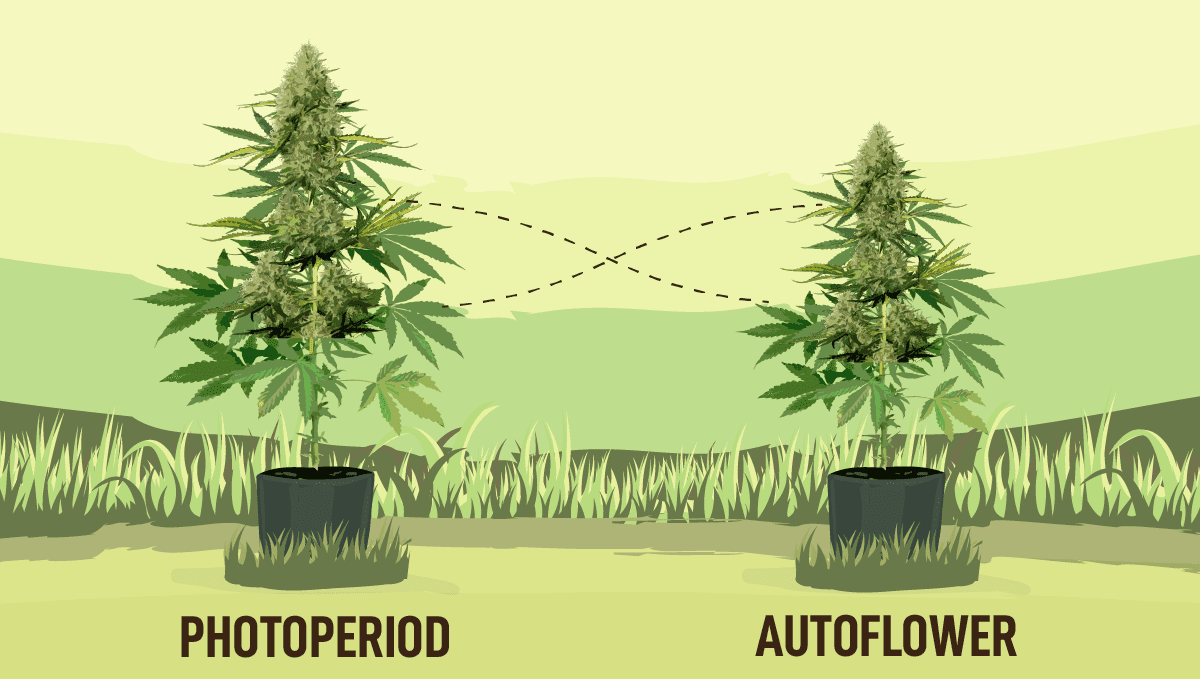
At first, breeders weren’t sure this would apply to all crosses but further testing confirmed that in fact, FF seeds (aka F1 hybs) resulting from the cross between autos x photos led to a significant shortening of the flowering cycle, being anywhere from 1- 2 weeks faster than the photo parent plants.
2. How Are FF Seeds Produced?
In order to breed and produce FF Seeds, you first need to select one automatic parent plant and one photo parent plant, this is the most important step as their characteristics will be passed on to the seeds, so it’s extremely important to make a good selection and start with the best genetics possible.
All plants seeds are made by combining male genetic material with female genetic material, this means that the offspring (seeds) will have received a gene from the mother and a gene from the father.
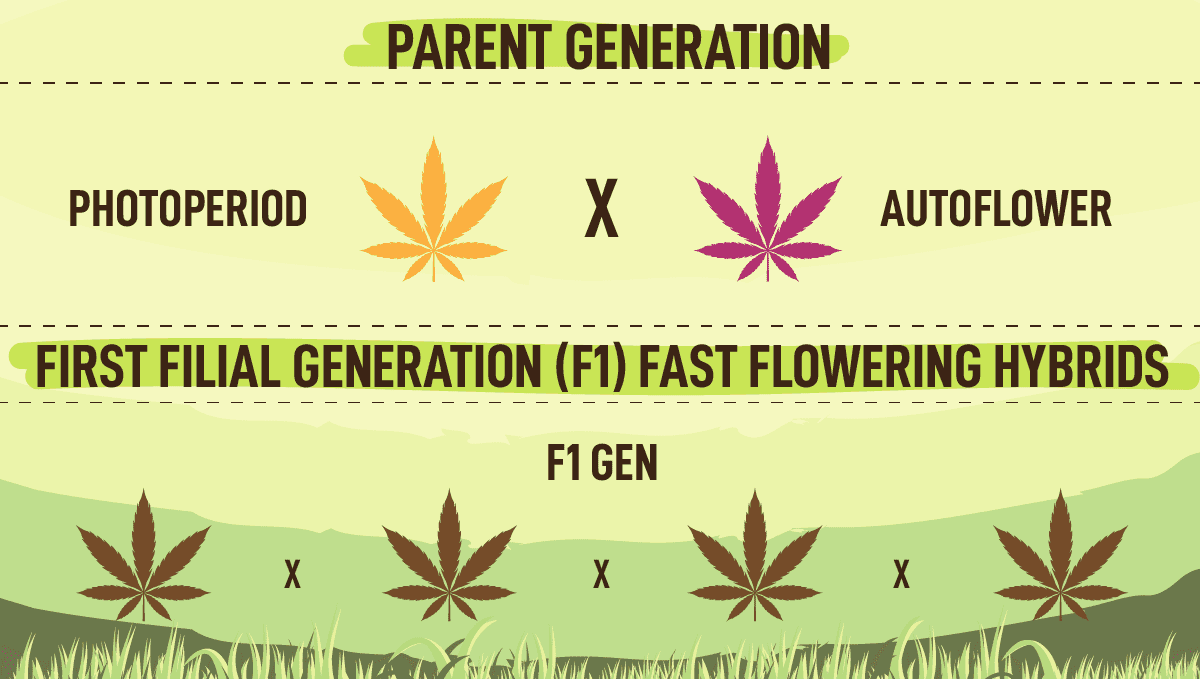
When talking about F1 hybs, the photo parent contributes with its photoperiod trait while the auto parent contributes with its automatic flowering trait but in this case, it’s a half-way inheritance, resulting in 100% photo plants with a reduced flowering cycle.
Selecting specific traits and continuing to cross genetics (F2, F3, F4, F5, and so on) will ultimately establish certain traits (like the color of the buds, plant size, smell, and effect, including if its photo or auto) until they are true for all plants resulting from the cross. Generally speaking, autos will breed true for the auto trait from the fourth generation (F4) and forward, meaning that before you reach the F4, you have to go through the F1, F2, F3, and so on.
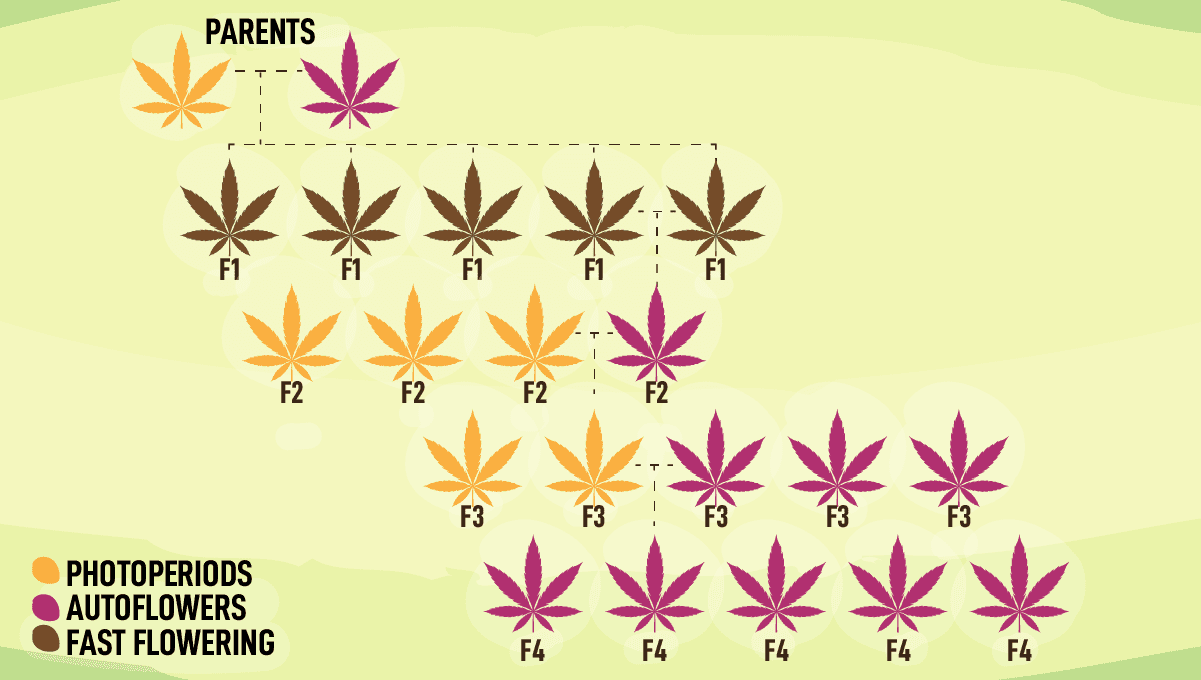
FF hybs are obtained only on the first generation (F1), this means that the second cross (F2) will not be 100% FF plants because the further you breed autos x photos, the more autos will appear in the offspring until 100% of the offspring breeds true for the auto trait.
|
Filial Generation |
Percentage of Photos | Percentage of Autos |
|---|---|---|
| F1 | 100% | 0% |
| F2 | 75% | 25% |
| F3 | 50% | 50% |
| F4 | 0% | 100% |
In short, the only generation that is 100% photo and ff is the first filial generation (aka F1).
3. What Makes an FF Seed an Actual FF Seed?
True FF’s are the result of the hybization between two stable but totally different genetics (aka when breeders cross two unique genotypes); By doing this, the offspring will develop “special attributes” that are the most sought-after characteristics from the parent plants, this is known as ‘hyb vigor’ and plants can express it as better returns, shorter flowering cycle and better resistance to harsh climates or diseases among others (in other words, combinations of unalike genes that naturally work well together or the most beneficial genes covering up the less beneficial ones).
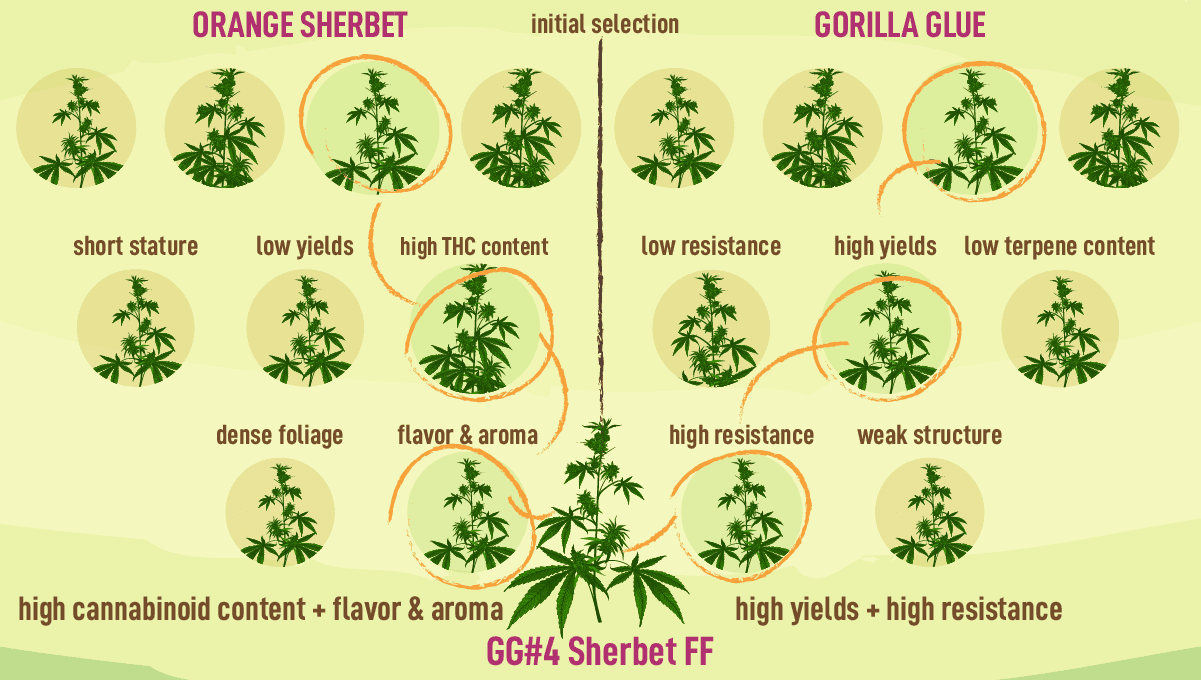
For example, plants native to completely different geographical locations (which have completely different genotypes) will exhibit greater hyb vigor than plants that have more similar genotypes (aka plants that are more related).
4. Why Choose FF Seeds?
Growing FF plants seeds gives you a great advantage as it allows you to control the vegetative stage, this means that you decide when the plant starts flowering; Let it grow for 3 - 4 weeks or let it grow for 10 weeks, it does not matter how tall or short your plant is, FF’s will always produce okous, aromatic, dense and most importantly, fast returns. So what are the other advantages of cultivating FF seeds? Well, FF’s allows you to:
Clone Mother Plants
Growers can maintain FF’s under an 18/6 cycle indefinitely, making it possible to keep mother plants that can produce clones, allowing you to grow an infinite number of exact copies of the mother plant from one single seed.
Control plant growth and returns
Just like any other photo variety, FF’s can be kept in the vegetative stage for as long as you wish. This means that you can grow huge 2-meter tall plants or the opposite, grow small, discreet plants by inducing flowering earlier.
Avoid diseases
FF seeds can finish up to 2 weeks before regular photo seeds, which is a huge advantage as it allows you to anticipate your returns so that you avoid the cold, rainy weather that can cause moldy flowers. Even when growing indoors, FF’s exhibit hyb vigor which means that your plants will better adapt to the environment, exhibit greater resistance to diseases and plagues, and have greater tolerance to stress.
5. Conclusion
FF seeds aren’t better or worse than autos or regular photoperiods, but are different and may give you a great advantage depending on where and when you’re growing. As a matter of fact, FF seeds are the perfect medium between photos and autos, providing the best of both worlds by giving you the option to extend or shorten the vegetative stage while considerably shortening the flower cycle and enhancing plant health.


Comments