
Plants Plants Anatomy: From Seeds To Buds

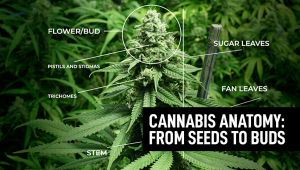
- 1. Anatomy of female vs male plants
- 2. Seeds and seedlings
- 3. Roots
- 4. Fan leaves
- 5. Sugar leaves
- 6. Pre-sex structures
- 7. Branches and stems
- 8. Nodes
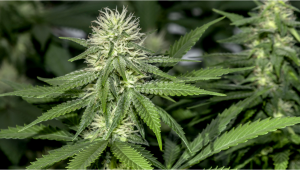
- 9. Flowers (buds)
- 10. Pistils and stigmas
- 11. Bracts
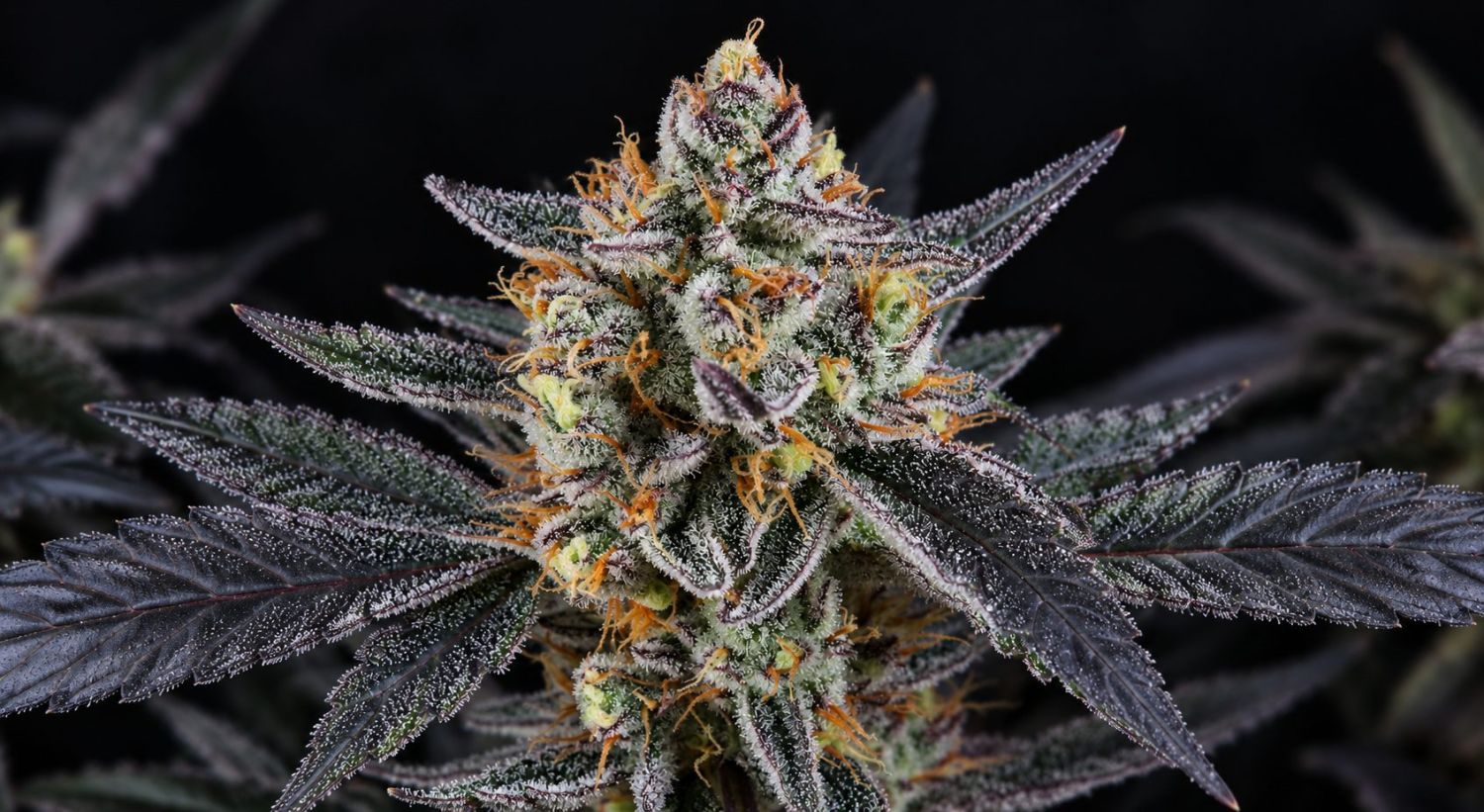
- 12. Frosts
- 13. The life cycle of plants plants
- 13. a. The germination stage
- 13. b. The seedling stage
- 13. c. The vegetative stage
- 13. d. The flowering stage
- 14. The difference between auto and photo plants
- 15. In conclusion
Many consumers have seen a plants flower (aka buds) and maybe a leaf, but have never seen a male or female plant grow from seed. When growing plants, you must become familiar with the anatomy of a male and female plants plant to know what they need and prevent problems. In 2026, you must know the parts of a plants plant, such as roots, nodes, calyxes, and frosts, to grow plants seeds and return top-shelf plants.
1. Anatomy of female vs male plants
Plants plants are dioecious. This means they have separate sexes, so the plants plants can be male or female. In plants, the female plant produces high levels of strength and develops flowers (buds), while the male plant produces low levels and develops pollen sacs.
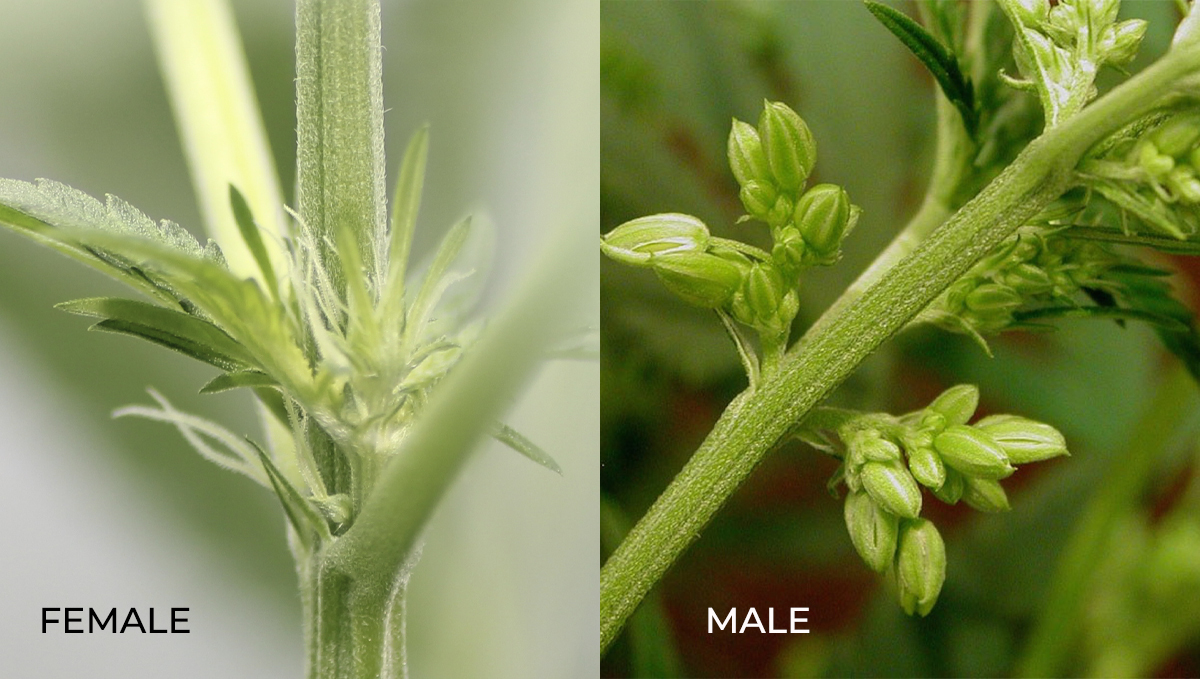
When both of them interact, the male pollen fertilizes female flowers (the buds), producing seeds that are used for breeding and plants cultivation. It’s essential you know which plant you need to grow to achieve the desired results, so in this article, we’ll explain the main differences and the anatomy of a plants plant.
Keep in mind that you may also find a hermaphrodite plants plant. A hermaphrodite plants plant will develop both male and female sexes, meaning you will see pollen sacs and white hairs on the same plant.
2. Seeds and seedlings
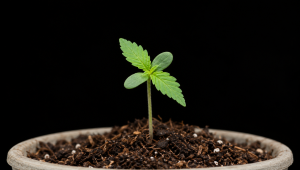
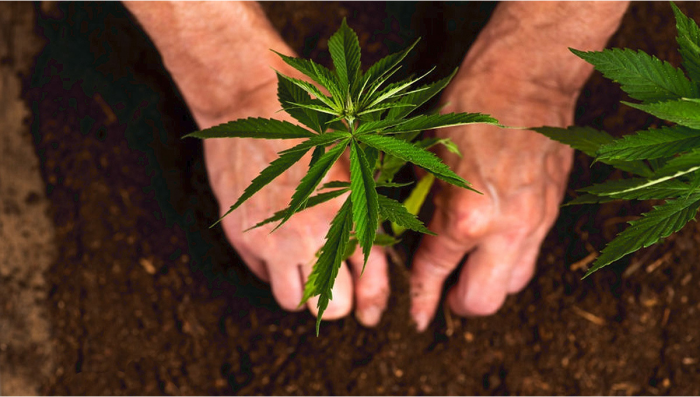
A seed is the first thing you need to start growing your own female plants plant. A plants seed has a hard shell to protect the embryo. This embryo is what will develop into a seedling when germinated, and eventually a full-grown plant. When exposed to the right temperature and moisture, you will see a seedling (baby plant) start to develop. This seedling comes out of the medium with a small pair of green, rounded leaves named cotyledons.
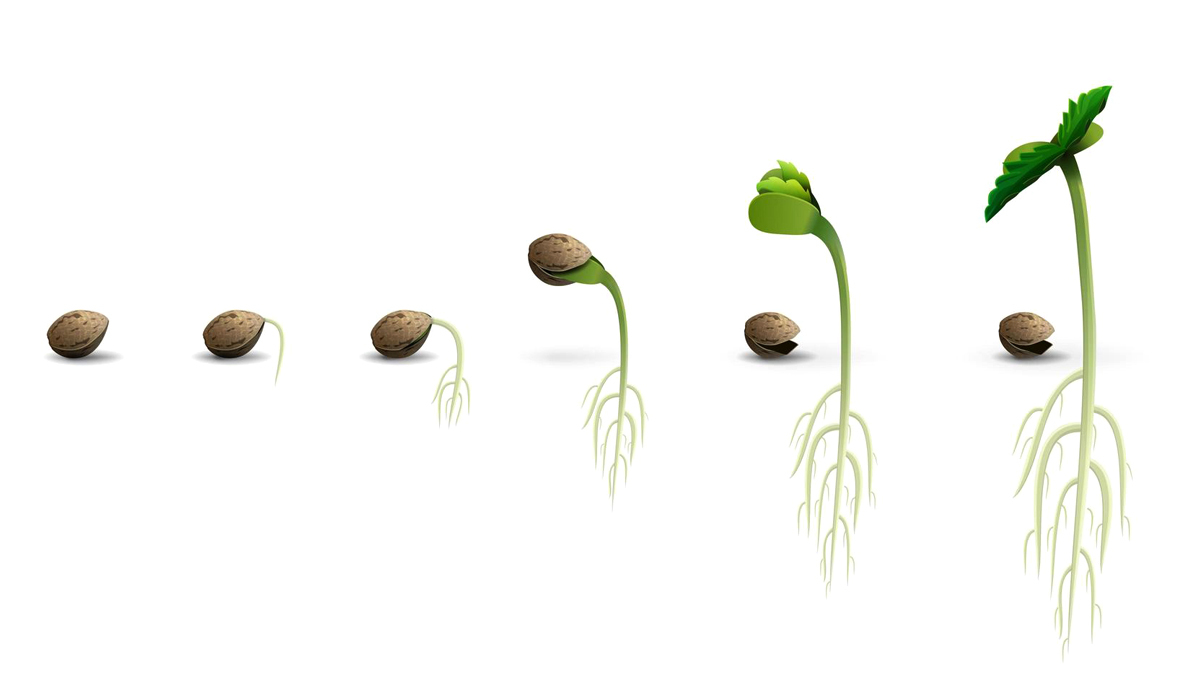
The cotyledons already contain chlorophyll, which allows the tiny leaves to perform photosynthesis, but it’s only in the early vegetative stage that you will see the first pair of serrated leaves develop.
3. Roots
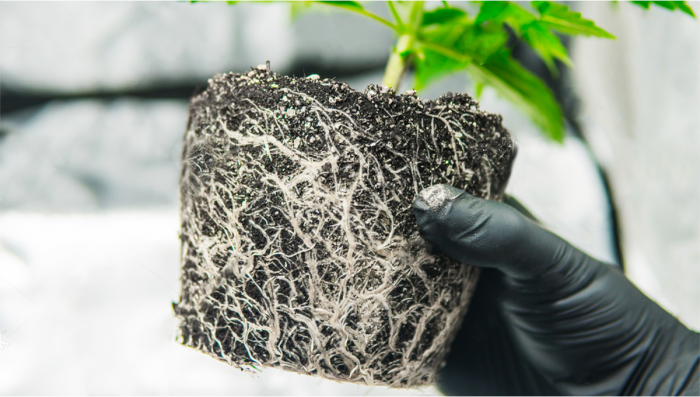
After 3-5 days of exposing the seed to germination conditions, you will see a white “tail” coming out of the seed. This “tail” is the taproot, which will start to grow longer and thicker, becoming the main root from which rootlets sprout.
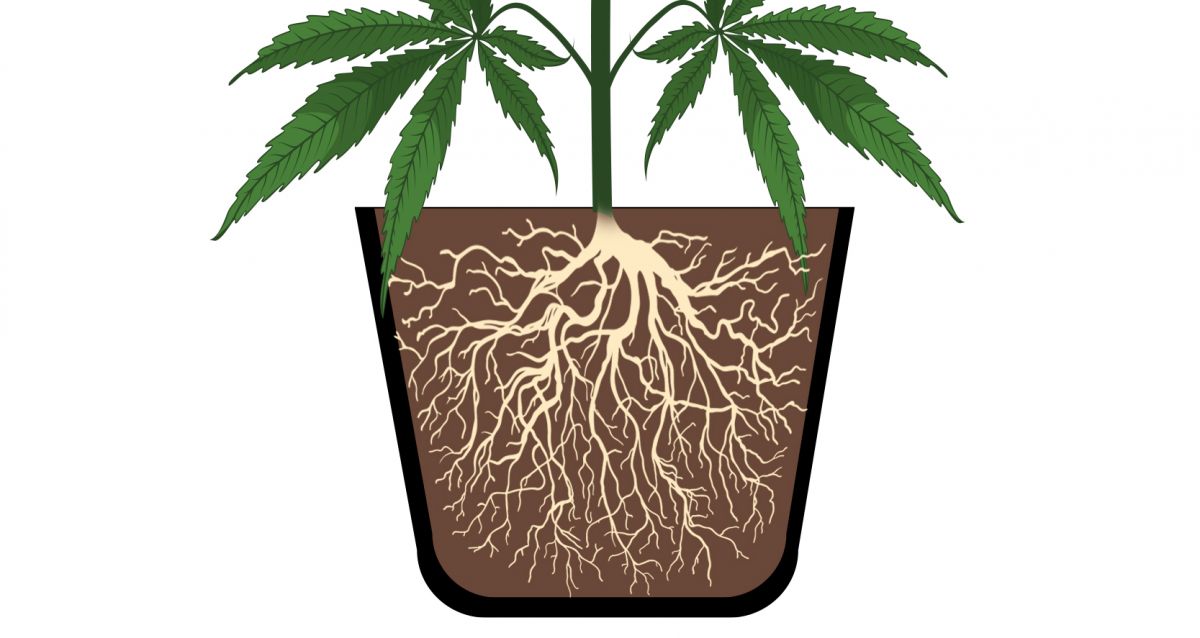
Once the main root grows to a considerable size, several lateral roots will start to emerge from it, forming a network of roots in the soil. This root network is responsible for absorbing water and nutrients, which are vital for your plant’s growth.
4. Fan leaves
Once the cotyledons emerge and are exposed to light, they begin photosynthesizing, producing sugars that help support the seedling’s early growth. Soon after, the first pair of serrated true leaves develops. As the plant matures, its fan leaves typically become larger and develop more leaflets—the individual “fingers” that make up the characteristic palmately compound plants fan leaf.
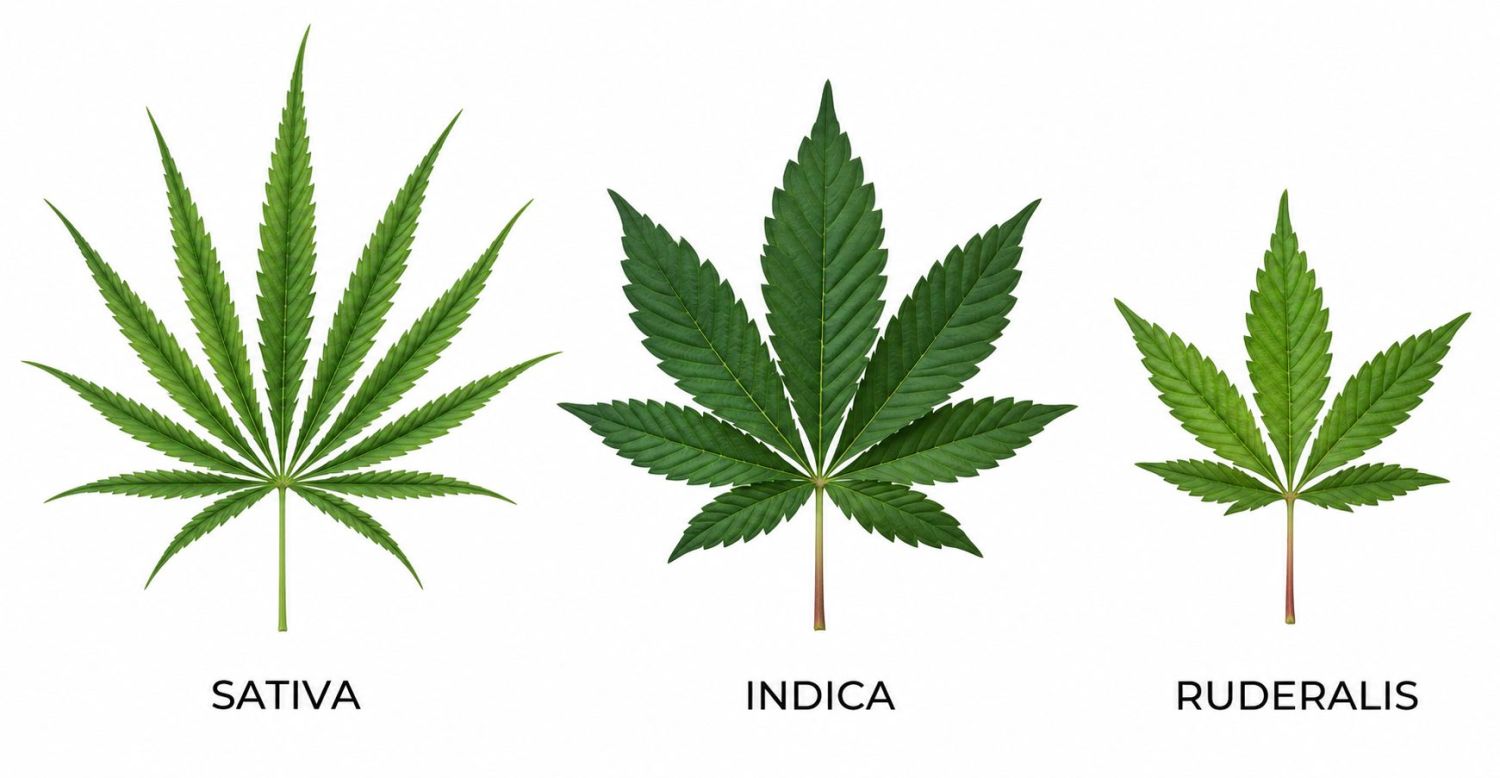
Depending on the plant’s genetics and stage of development, plants fan leaves can have five, seven, nine, or even more leaflets. Regardless of the number of leaflets, fan leaves play a major role in photosynthesis, using light energy, carbon dioxide (CO₂), and water to produce the sugars the plant needs for growth and development.
Leaf shape and size can vary considerably between plants cultivars. Traditionally, plants described as Ind have been associated with broader leaflets, while those described as Sat tend to have narrower leaflets. However, these distinctions should be taken with a grain of salt. Most modern plants cultivars have been extensively hybized, so the terms Ind and Sat do not reliably indte a plant’s genetics, chemical profile, or effects. Auto plants can also display a wide range of leaf shapes, depending on their genetic background.
| Plants leaf characteristics |
|
|---|---|
| Species | Leaf characteristics |
| Sat plant | Skinnier with up to 13 “fingers” or more. |
| Ind plant | Fat and wide leaves with up to 9 “fingers”. |
| Ruderalis plant | Short and compact, developing 3-5 “fingers". |
These sugars are a plants plant’s source of energy and it fuels growth and all the biological processes it needs. The purpose of fan leaves is to absorb sunlight and store water and nutrients.
5. Sugar leaves
Sugar leaves are not too big and usually grow in between the buds on female plants. This foliage can sometimes have frosts on them, but it will depend on the frost production of each specific seed.
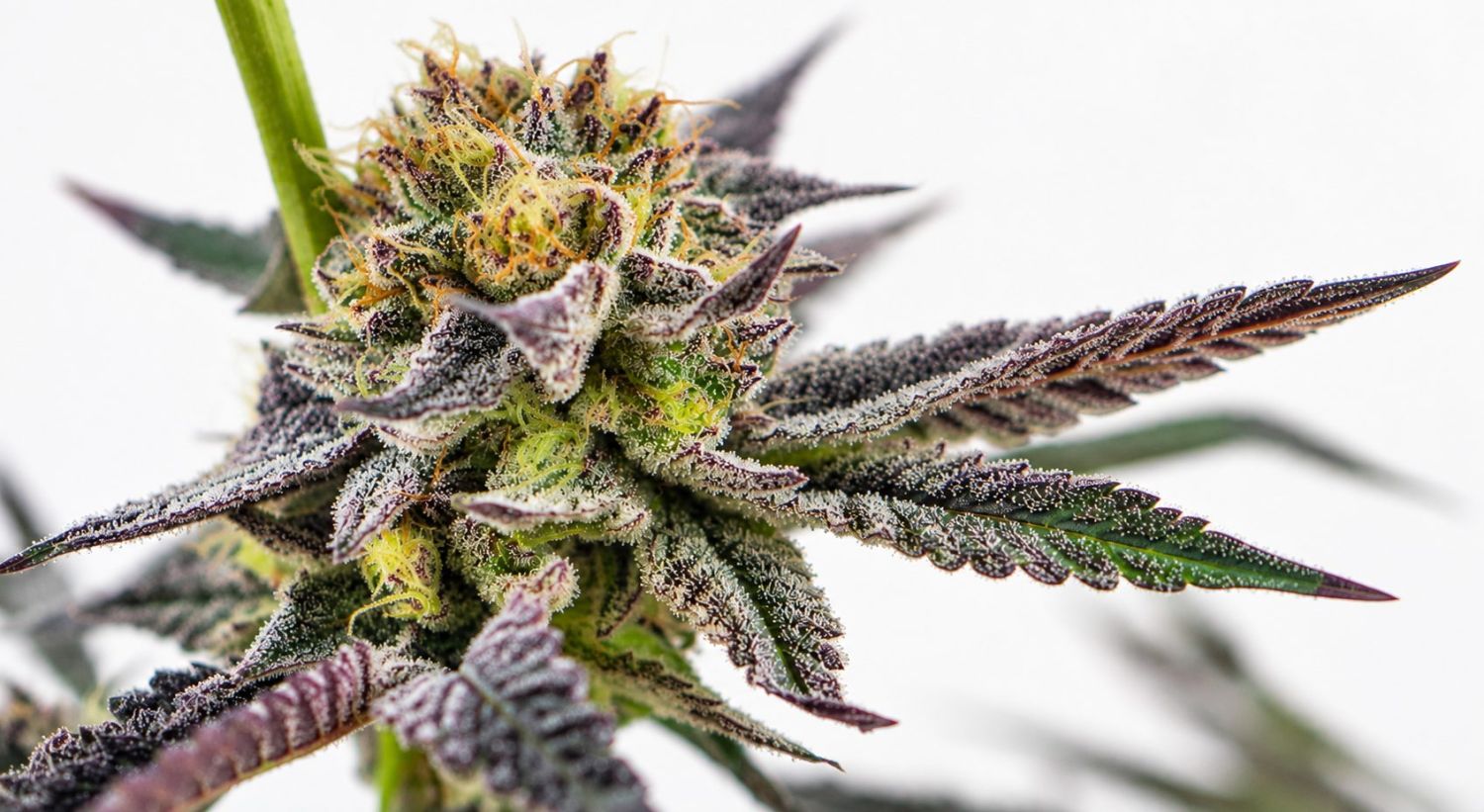
These leaves contain less ok than buds and are usually not consumed, but depending on the quality of the return, these leaves can be used to make edibles, oils, and extracts.
6. Pre-sex structures
The pre-sex structures (which will eventually be the plant’s sex organs) appear on the internodes in the pre-flowering stage of the plants plant. If your plant turns out to be a male, you’ll see small balls appearing, which are pollen sacs in the early stages and will grow into buds.
These pollen sacs will eventually develop and open up, releasing the pollen needed to produce seeds. Now, if you see white hairs (stigmas) instead of pollen sacs, your plant is a female.
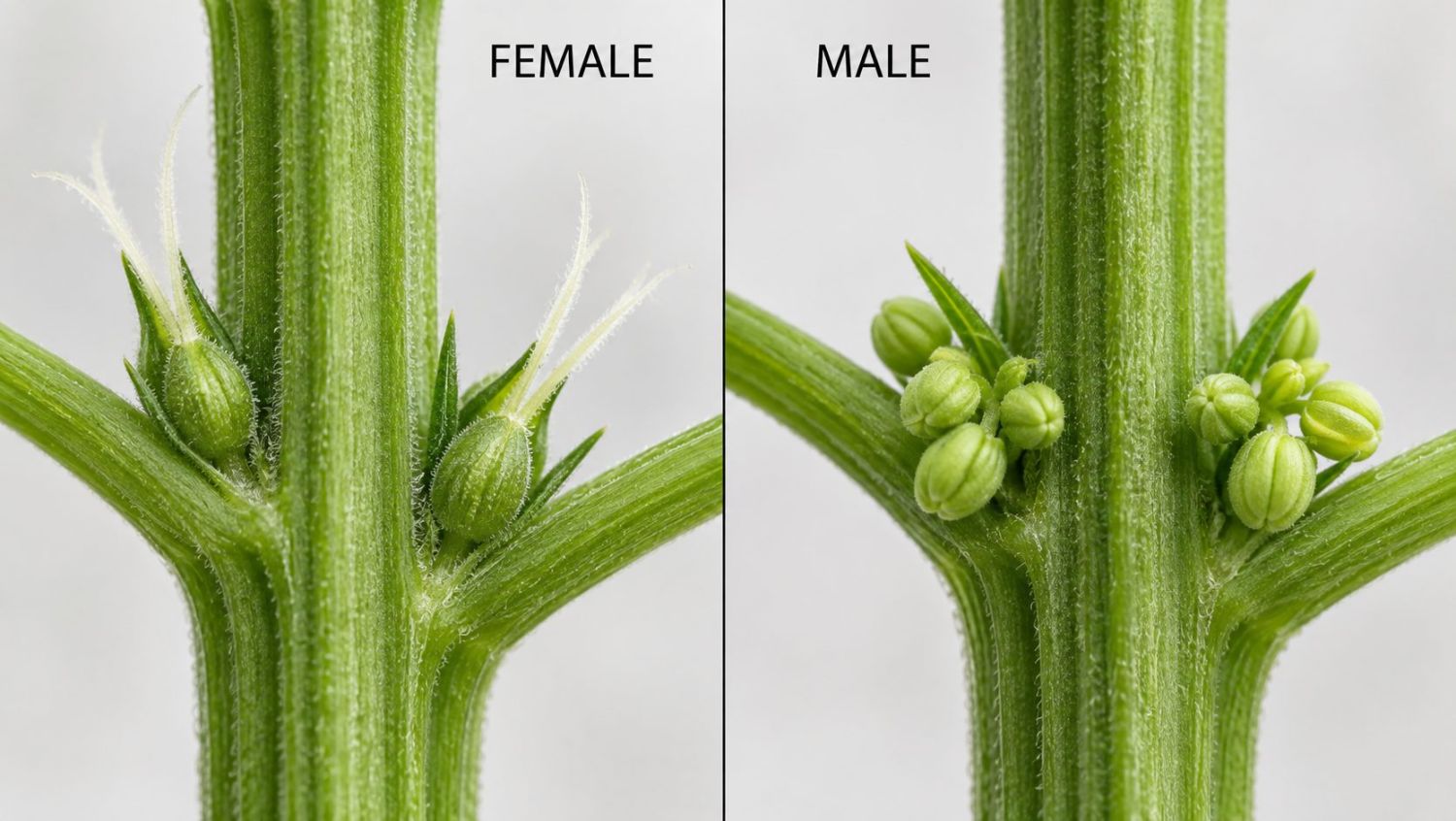
If you’re a home grower, you should “sex” your plants (grow a clone under 12/12 to see their sex organs) before they are completely mature. This will prevent the male plants from pollinating the female plants; keep in mind that fertilized flowers will produce seeds, which decreases the amount of strength and overall return of the plant.
Now, if you’re a breeder or just want to experiment with plants breeding, you can have a breeding chamber so you can pollinate your plants in a controlled space and prevent cross-pollination because pollen is extremely light and can travel on your hair, clothes, and even by the wind.
7. Branches and stems
As said above, leaves absorb sunlight, and as new leaf growth appears, your plant will consequently get more light, and the stem and branches will get thicker and thicker, developing more internodes (and more internodal spacing) on both sides of the stem.
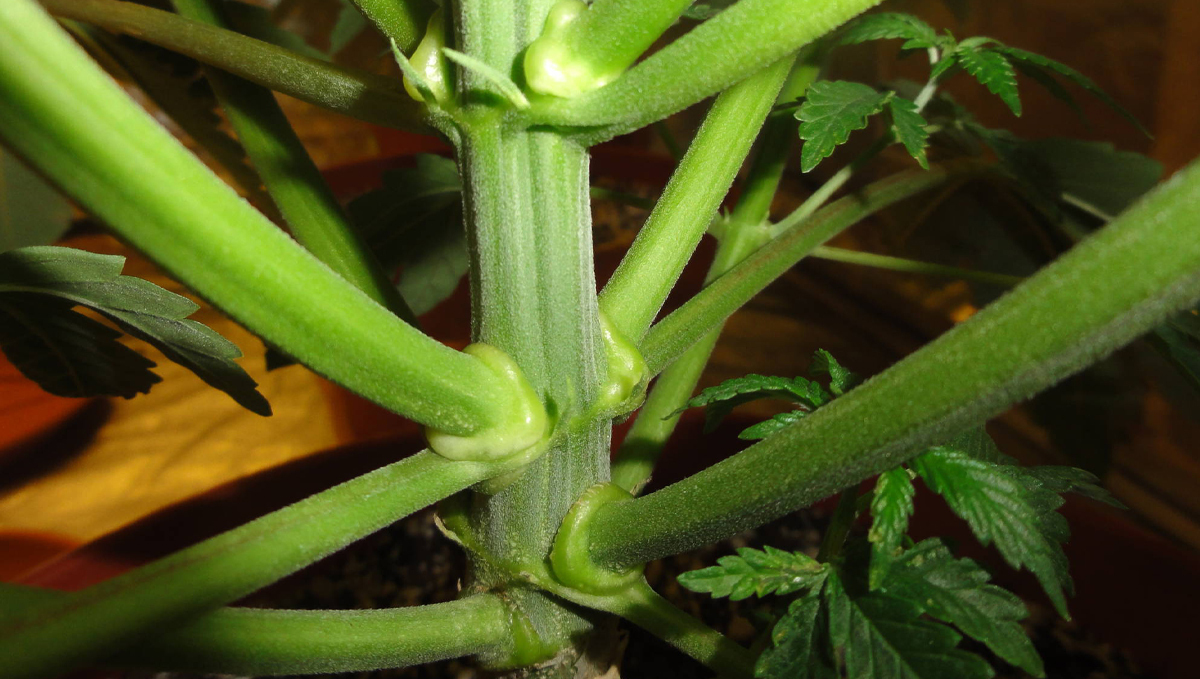
The main part of a plants plant’s anatomy is the stem. The stem provides support to the foliage, branches, and female or male flowers, aka sex organs (basically the whole plant). Inside the stem, there is a vascular system that consists of the Xylem and Phloem. The Xylem transports water and the nutrients dissolved in water, while the Phloem is responsible for transporting sugars, proteins, and other organic molecules in plants.
8. Nodes
Nodes are the point where branches come off from the stem, in the vegetative stage of a plants plant they’re parallel to each other but when your plant begins flowering the appearance of nodes can become irregular, now this isn’t a problem at all, it’s just a characteristic of some plants seed.
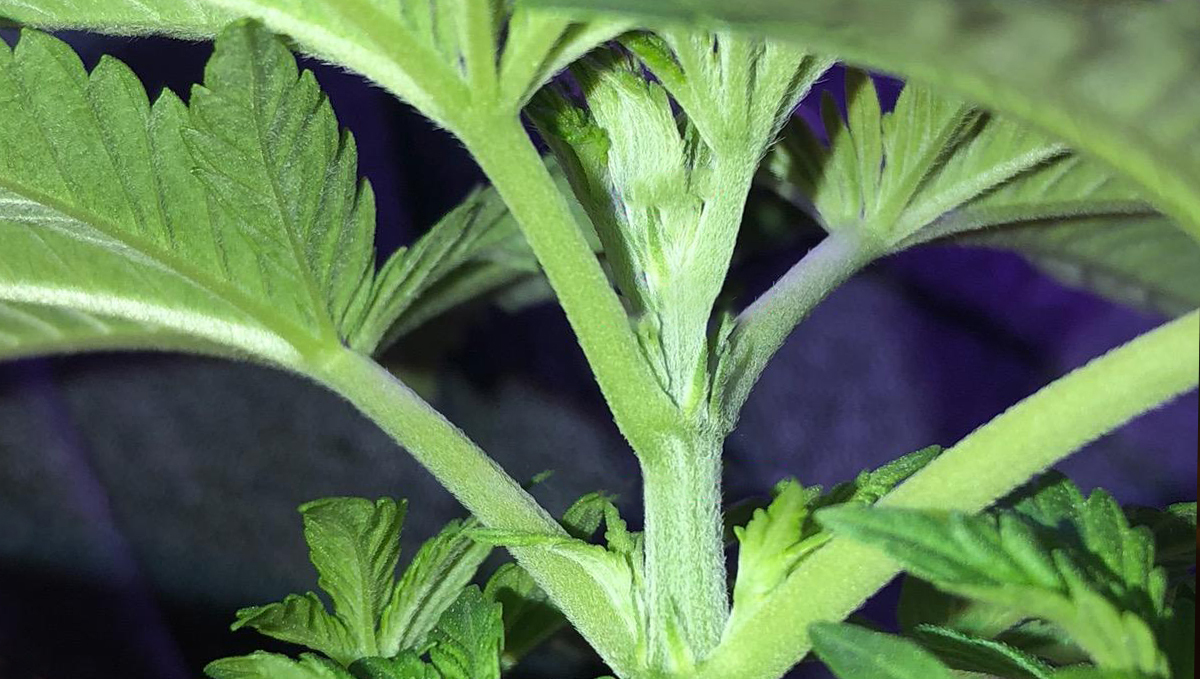
Have in mind that nowadays most plants seeds are hybs (a combination of Ind and Sat genetics), so this won’t always be 100% correct, but usually, Inds tend to have nodes that are closer together, while Sat’s nodes are usually more spaced out.
These nodes are essential because they are where the buds or pollen sacs will start to develop, and it’s where the first signs of your plant’s sex appear.
9. Flowers (buds)
The buds (flowers) are the most important part for growers, but also for the plants plant. The flowers play several roles, such as attracting pollinators and producing seed (once they’re fertilized) to perpetuate the plant species. Nowadays, you can find fem seeds, which means the seeds will result in 99.99% female plants, but in nature, plants plants are not fem, meaning they can be female or male.
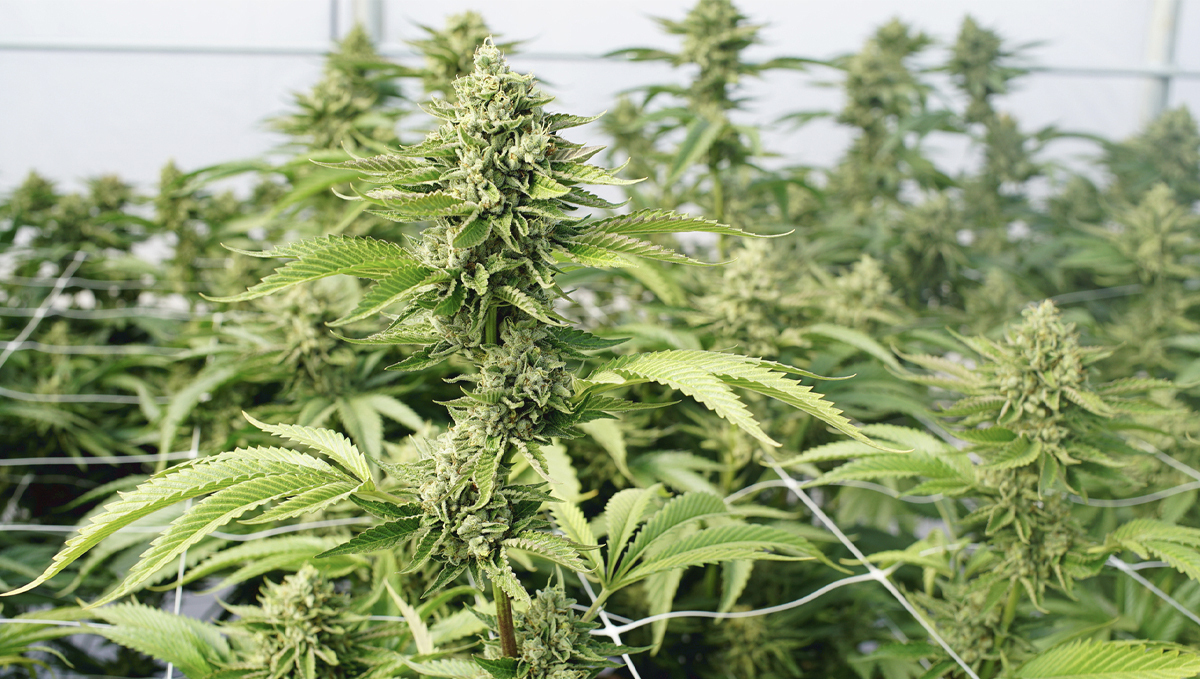
The pre-flowering stage is vital in differentiating whether the plant is a male or a female because it’s when a plant will show the first signs of its sex. The flowers (or buds) that form on the top of the stem are known as the main cola.
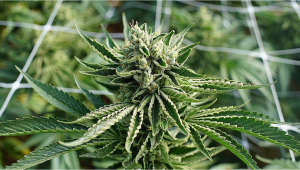
The main cola is known as the apical bud or main cola, and it’s where most of the buds gather together to form the main bud. You’ll also see small clusters of flowers between the foliage in the internodes, but compared to the main cola, the side colas are smaller.
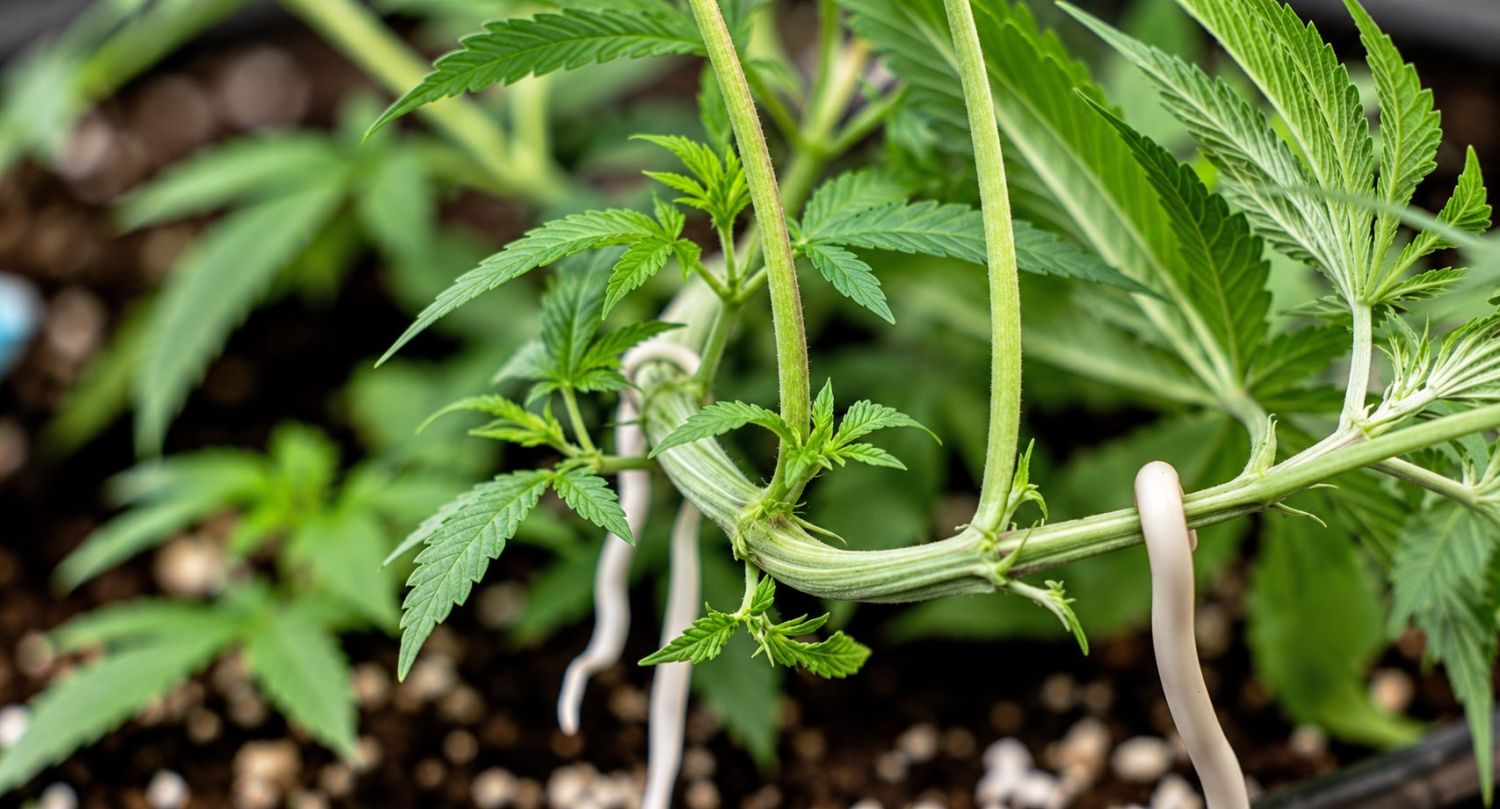
To prevent popcorn buds, LST and HST plant training methods are utilized to shape plant growth and expose the flowering sites to more light and airflow, allowing the buds to grow bigger while also improving their quality.
When talking about flowers, there’s a distinction between female and male flowers. Male plants usually develop 2-3 weeks earlier than female flowers and, as said above, do not develop buds, but colas that consist of pollen sac clusters.
10. Pistils and stigmas
The pistils and stigmas are the reproductive parts of the female flowers. Most plants consumers know the stigmas as pistils, but that is wrong because the pistils are the part where the stigmas (white hairs) grow from. These hair-like parts are responsible for collecting pollen grains from the male flowers and consequently produce seeds.
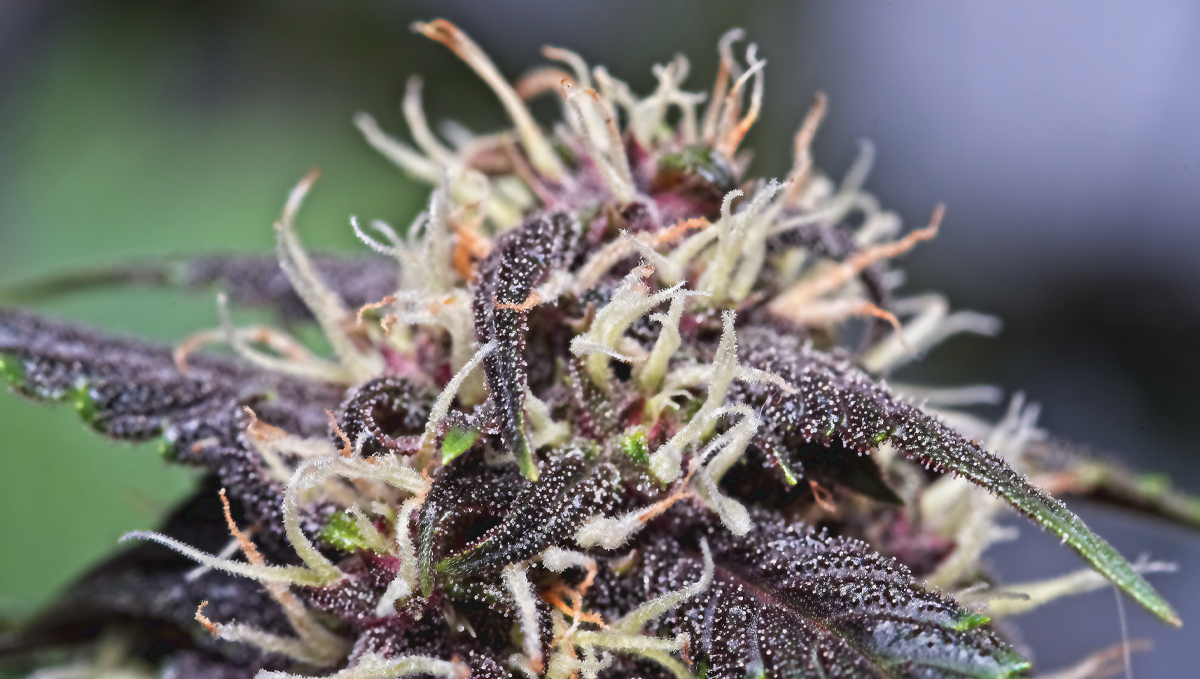
When a plants plant is fully mature, the stigmas can change color several times, usually starting with white hues, then yellow, orange, or red, and lastly, brown. Keep in mind that, unlike frosts, stigmas are not an indtor of potency, but can be an indtor of maturity.
11. Bracts
The bracts, which are usually called calyxes by mistake, are what actually form the buds on a plants plant. They are pear-shaped nodules that develop between the sugar leaves, but depending on the seed, they can appear in several colors, shapes, and sizes.
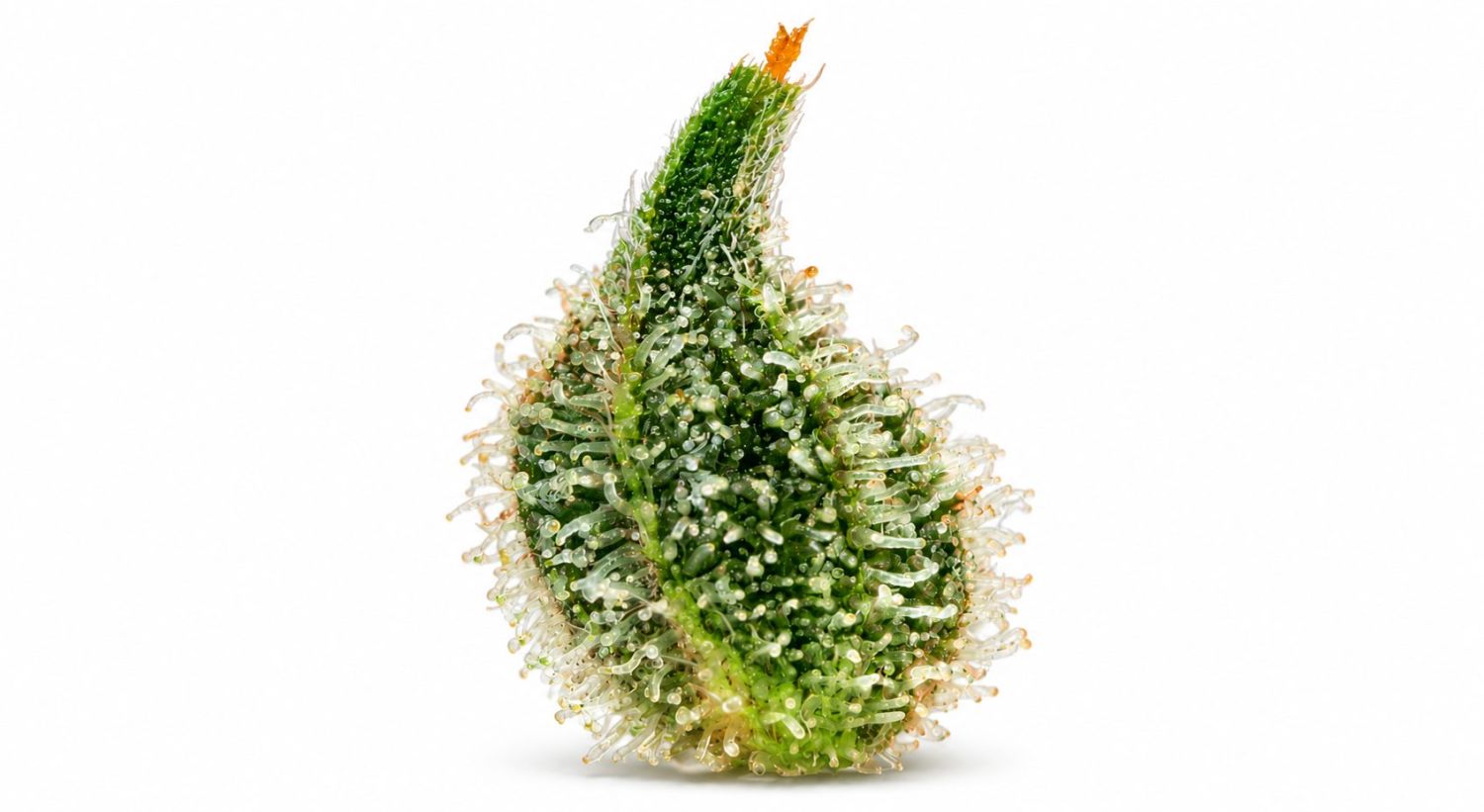
When the stigmas get pollinated, the bracts essentially turn into a "seed incubator" which allows the seeds to grow and ripen but ends up affecting the returns and can affect the ok quantity on your buds, that’s why “sinsemilla” or fem seeds are preferred by growers and consumers.
A non-pollinated flower is usually frost-rich because your return will have more frosts, and they are responsible for producing and storing flavor and strength.
12. Frosts
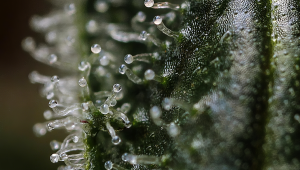
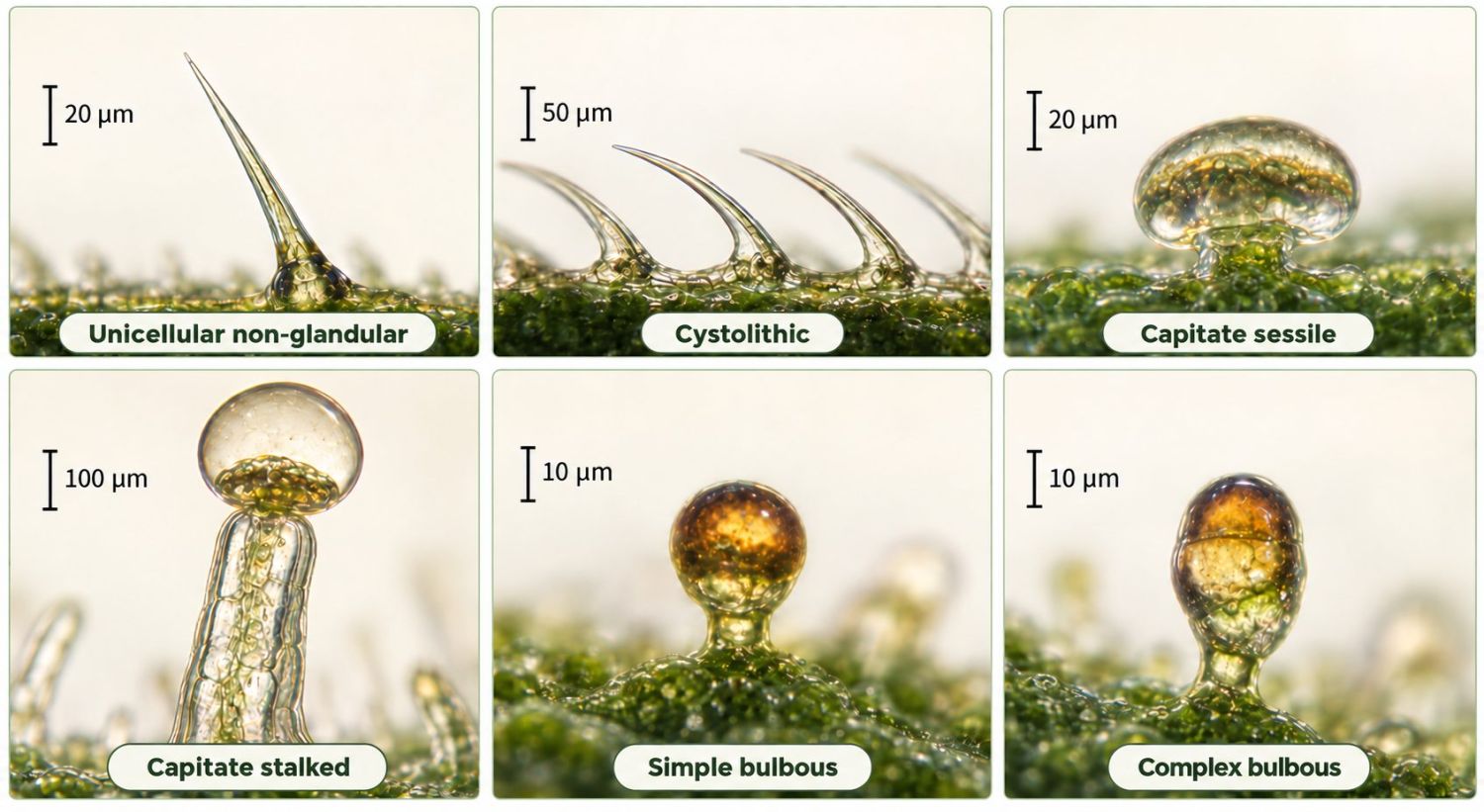
Frosts are the tiny crystals found all over the buds and surrounding foliage and are considered the most important part for plants consumers. These mushroom-shaped glands are clear and sticky, and form a thick layer on the buds. These mushroom-shaped glands, known as frosts, can be found in different types and sizes. They are:
- Capitate-stalked frosts 100 µm;
- Cystholitic frosts 50 µm.
- Unicellular non-glandular frosts 20 µm;
- Capitate sessile frosts 20 µm;
- Complex bulbous frosts 10 µm and;
- Simple bulbous frosts 10 µm;
All “recreational seeds” are strength-rich; depending on the seed, the frost production may differ, resulting in more or fewer frosts on your plants, but either way, all plants plants will produce frosts.
For home growers, frosts are the standard practice to know exactly when to return, but they are actually produced by plants plants to provide defense against predators and UV light. Although we don’t usually think about this when growing indoors, all the parts of a plants plant have an important role.
13. The Life Cycle of Plants Plants
Now that you know everything you need about the anatomy of plants plants, let’s understand a bit more about the life cycle of plants plants. Plants plants can take anywhere from 8 to 32 weeks to grow and mature, and during this time it goes through four stages. They are:
- Germination stage;
- Seedling stage;
- Vegetative stage;
- Flowering stage.
And it’s essential for you to understand these stages to grow healthy plants, as each stage requires different light spectrums, light cycles, nutrients, and growing conditions.
The Germination Stage
Just like with any other plant, plants plants start from seeds. Plants seeds are dormant until exposed to warmth and moisture. This means that if you are looking to germinate plants seeds or any other type of seed, you will have to hydrate them and place them in good conditions.
After planting, seeds can take anywhere from 3 to 10 days to germinate, and seeds contain enough food for 2-3 weeks, which means there's no need to water with a nutrient solution until the seedling has come out of the soil. Once the seedling comes out of the soil, you’ll see two small rounded leaves, which are called cotyledons, and this is what marks the beginning of the seedling stage.
The Seedling Stage
The seedling stage of plants plants can take anywhere from 1- 3 weeks, and sometimes more depending on the seed and growing conditions. During the seedling stage, plants focus on developing roots and foliage, this means that the roots are still small and fragile so be careful to not overfeed or overwater them.
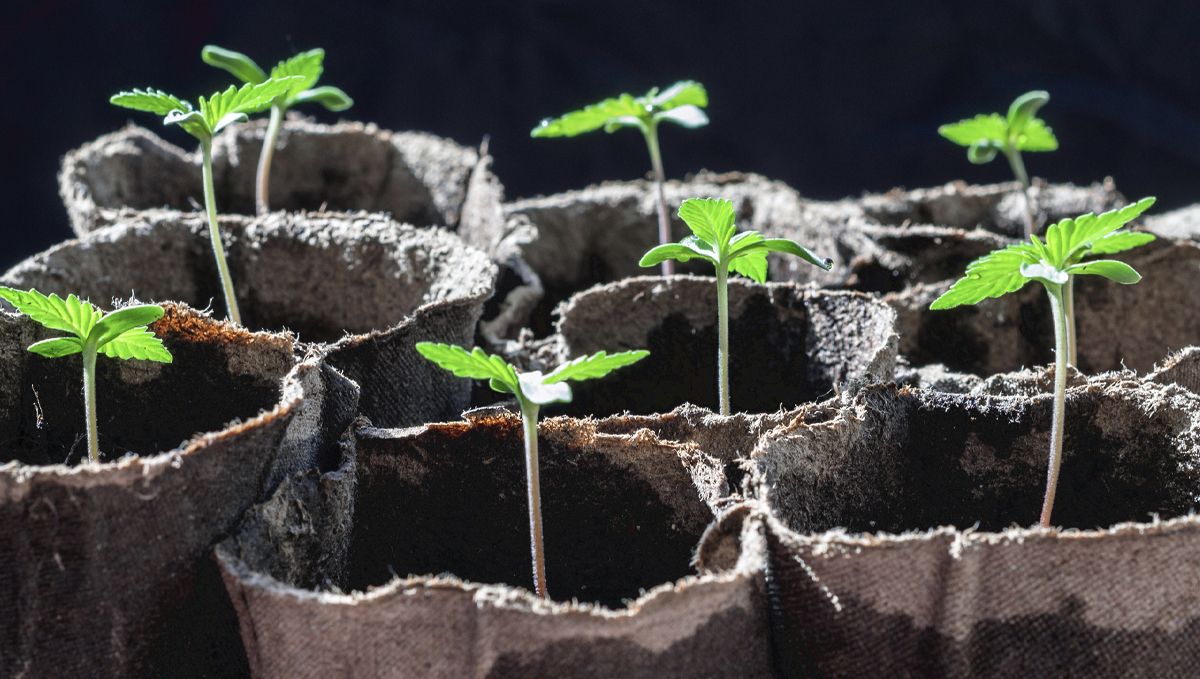
Once you’re in the seedling stage, make sure to provide 18 hours of light and 6 hours of darkness, and remember to keep an eye on them as they’re extremely susceptible to pests and diseases.
The Vegetative Stage
After a couple of weeks in the vegetative stage, your plants will start needing more food, light, and water as the roots and foliage start to grow exponentially. During the vegetative stage, you have to make sure you’re feeding your plant higher levels of nitrogen and less phosphorus and potassium, as nitrogen is needed to develop foliage. If you’re growing indoors, the general rule is to flip to 12/12 (which triggers flowering) once the plant is ⅓ or ½ of the size you want it to be by return.
The Flowering Stage
Once you flip to 12/12 (or when autumn comes outdoors), your plants will start flowering. The flowering stage can take from 6 to 10 weeks or even more, depending on the seed. This stage starts with the appearance of pre-flowers, which will eventually fatten up and turn into those delicious sticky flowers you've been waiting for so long. Obviously, this is just a quick rundown, and there are a lot of things to keep in mind other than the light cycle, but understanding the life cycle and anatomy of plants plants will allow you to anticipate problems before they happen.
14. The Difference Between Auto and Photo Plants
Alrighty then, there you go. Everything you need to know about the lifecycle of a plants plant. Or is it? What we have described above pertains to photo seeds, but there's a new player in town. Autos! Once thought of (quite rightly, to be fair) as the runt of the litter with smaller return possibilities and lower potency than their photoperiod cousins.
Thanks to the hard work and dedication of a handful of select breeders over the past two decades or so, autos are now at the stage where they can match (and even outperform, in some cases) photo seeds in all the important categories and have been for a few good years now. We are talking about the size of returns, the potency of the buds, and the flavorene and flavonoid production.
And they come with some huge advantages over photo seeds, for novice and experienced growers alike. These benefits include -
Faster turnaround time
Some auto plants can go from seed to return in around 8 weeks (with most seeds taking less than 10 to 11 weeks - crazy fast), whereas photo seeds can take at least twice as long, especially Sat-dominant cultivars.
Easier to grow
Autos require less attention and care than their counflavorarts. These are the sort of seeds that can be planted and almost forgotten about.
Versatility
Autos are incredibly versatile and can be grown in almost any environment and condition. They do not require a perfect climate like photo plants and will often thrive in less-than-perfect conditions. This is thanks to their Ruderalis heritage, which hails from the harsh climate of northern Europe.
Stealthiness
Autos are generally a little smaller and more compact than photo plants, making them easier to hide away.
Hardiness
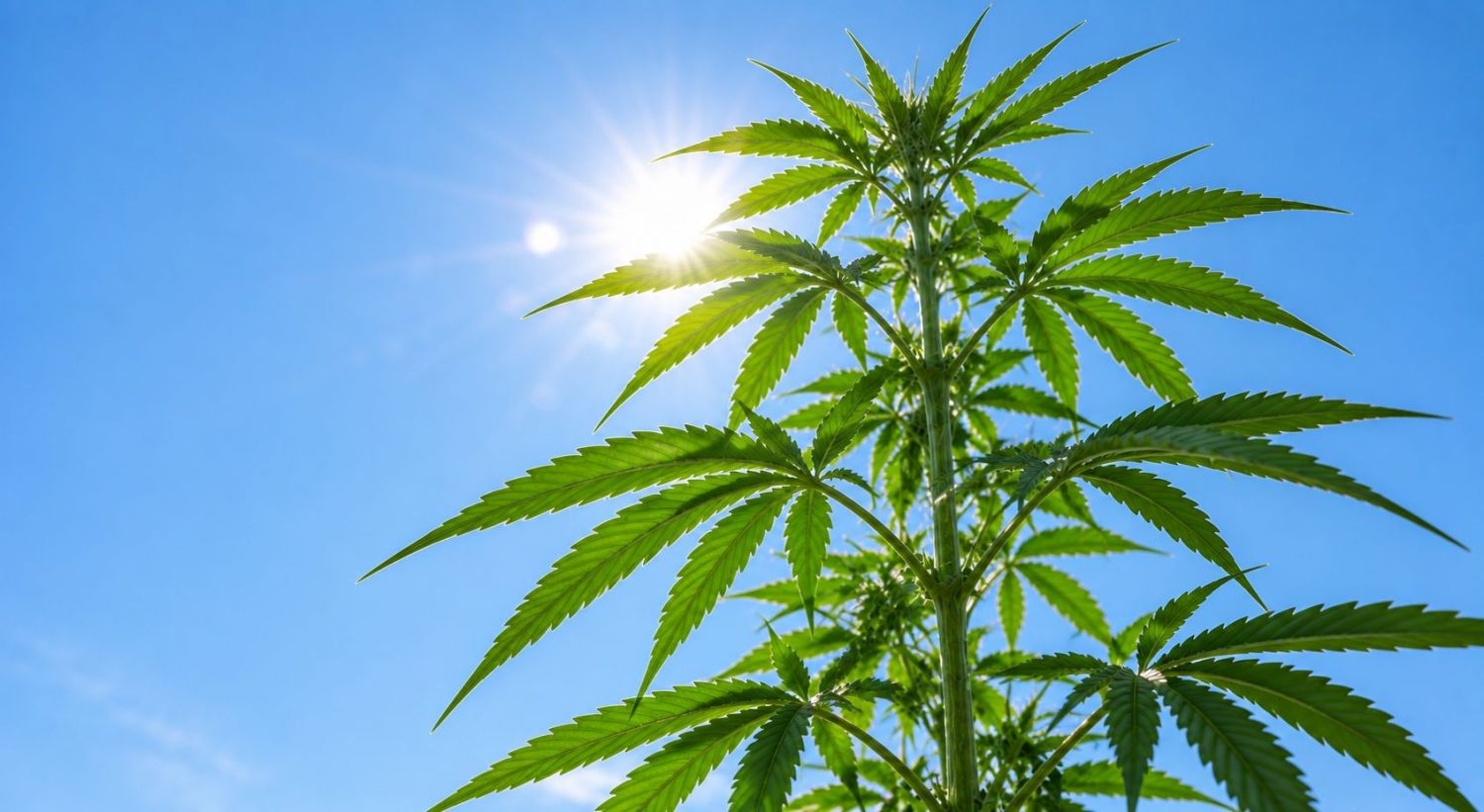
Autos, in general, have a higher resistance to pests, mold, and other diseases when compared to photo seeds.
More returns
Autos can be returned more than once a year because they do not rely on the seasons for their flowering cycle. This means that if you are growing outdoors, you can usually get two crops over and done within the same time as one photo crop. If you are an indoor grower, setting up a perpetual return routine (where you cycle plants through the room at different stages) is so much easier with autos, as plants in all stages of growth can be under the same lighting routine. We will get into this in more detail a little further down.
But how do auto and photo seeds differ in terms of the lifecycle?
Well, the main clue to the answer to this question is in the name. Unlike photoperiod cultivars, whose stage of growth is determined by the lighting period, auto seeds essentially have an inbuilt genetic timer that will switch from vegetative growth to flower production no matter what the lighting schedule is. This comes with a huge range of pros for both indoor and outdoor growers.

The best lighting schedule for autos
So, we know that for photo seeds to start the flowering cycle, we need to switch the lights from 18 hours on / 6 hours off per day to 12/12. Easy enough, but it does mean that you need dedicated vegetative and flower-growing areas if you are an indoor cultivator. This is not the case with autos! As we mentioned above, one of the main advantages of auto plants is that they will flower no matter what the light schedule is, so long as they have enough light in total. This means you can keep autos under 22/2, 20/4, or 18/6 lighting from seed to return. It's really up to you.
But after years of experimentation and testing, we can confidently say that for the very best results with autos, we suggest running the lights either 20/4 or 18/6 per day. Autos will grow under a 24/0 schedule, but the lack of rest time can cause some stress issues depending on the seed. While this less important lighting schedule just makes life easier, it comes with another huge advantage...
Setting up a perpetual return routine with auto seeds
What's the one thing we all want as cultivators? Well, there are a few valid answers to this question, but the one we hear most often is an unending supply of top-quality buds. And what's the easiest way to ensure your supply never runs dry? By setting up a perpetual return routine!
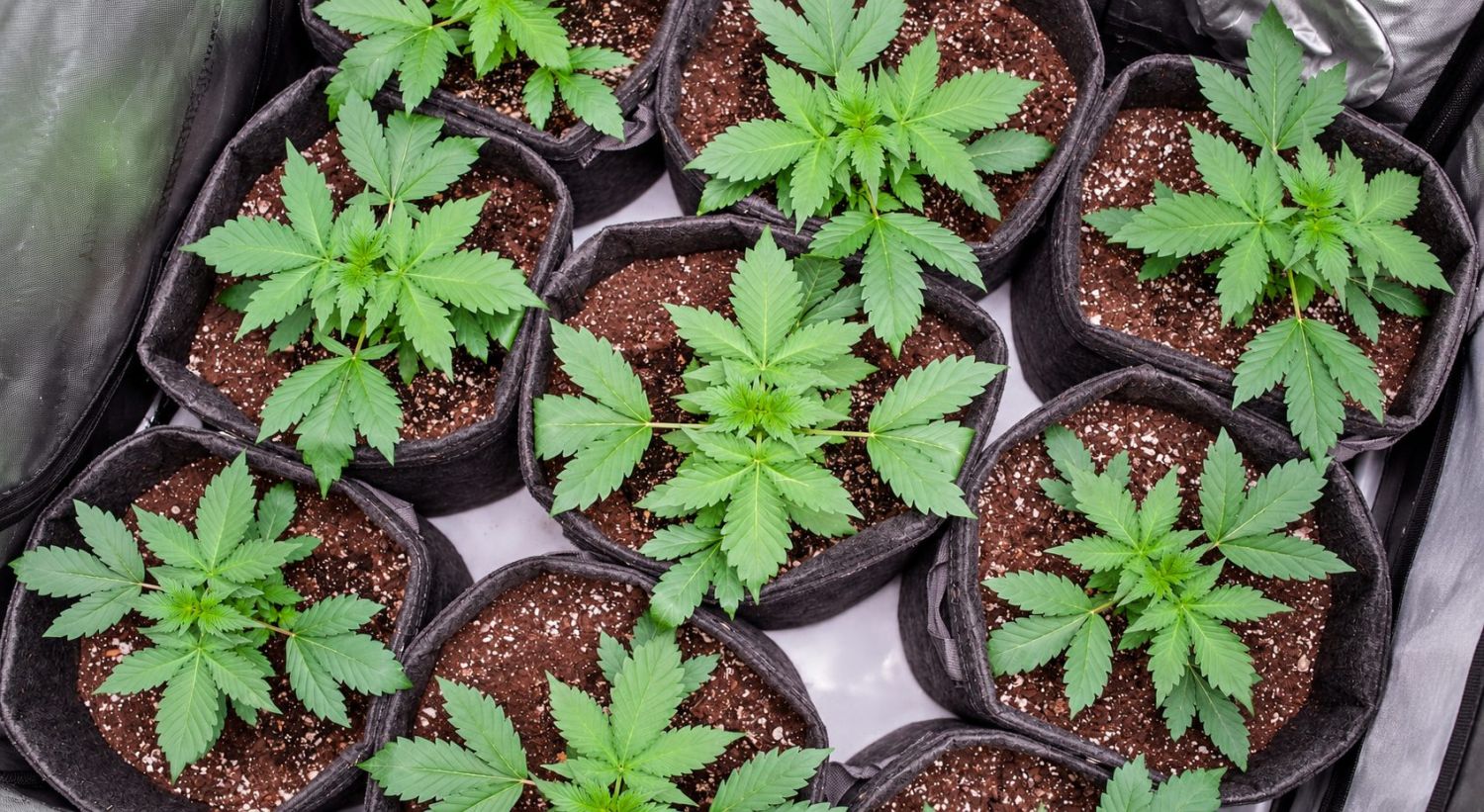
And while this can be done with photoperiod seeds (through the use of separate veg and flower rooms), it's super simple when growing autos. Thanks to the fact that auto seeds will progress through the flowering stage no matter the lighting schedule, you can have all your plants in one single grow room. Simply stagger the start and finish times of your plants by planting new autos into the room every week or two (aim for around 3 - 4 weeks in the space). This way, you will have a continuous supply of buds being returned and new plants being started. Perfect! The best way to do this is by splitting your grow are down the middle, with one side dedicated to plants in veg, and the other side dedicated to flower.
This way, when one of your autos on the flowering side is ready to be returned, you can move it out and replace it with a new auto from the veg side. We also suggest running with a full ScrOG setup for the flowering plants, as this will keep the entire canopy at an even height throughout the flower stage - helping you achieve a balanced and uniform return. But what about return? Does growing autos under a perpetual cycle reduce your overall return? The answer is no - provided you give each seed enough time to reach its full potential in terms of size and strength/Extract levels, you can expect to achieve the same returns from an auto-flower crop regardless of whether you are running a perpetual cycle or not. What about the seedlings?
Well, you can run them in the same room as the rest, but we don't suggest it. The main grow light is a little too intense for seedlings, and it's better to get them used to the conditions before plunging them into high-intensity lighting. Seedlings also like a slightly warmer and more humid environment than plants in full veg or flower growth. So, it's best to start your seeds in a warm room with softer light and temperatures between 22 - 28C (72-85F). Once they have formed a strong root system and are starting to display their first set of leaves, they can then be moved into the main grow room.
15. In conclusion
Plants plants are millennial plants that have developed and perfected their structure throughout the years; even though we don’t see it like that, all the parts of a plants plant (not only its sex organs) are essential for them to grow and perpetuate their species. Feel free to leave tips and more important information to help educate fellow growers. Leave a comment in the comment section below!
External References:
- Morpho-Anatomy of Plants (Plants sat L.). - Raman, Vijayasankar & Lata, Hemant & Chandra, Suman & Khan, Ikhlas & Elsohly, Mahmoud. (2017).
- Understanding Plants. - Hunt, Debra & Keefe, Joanne & Whitehead, Tammy & Littlefield, Amber. (2020).
FAQ
Yes. Although plants is predominantly dioecious, meaning male and female flowers usually occur on separate plants, mixed sex expression can occur. Some plants can develop both male and female reproductive structures depending on genetics and environmental factors.
Stigmas are the hair-like structures extending from female flowers. Their biological function is to capture pollen, which can lead to the fertilization of the ovule.
Not exactly. The terms are often used interchangeably by plants growers, but botanically they describe different structures. Much of what growers commonly call a "calyx" is actually the bract surrounding the female flower.
Frosts are tiny mushroom-shaped structures found on plants plants. The glandular frosts concentrated on female flowers produce and accumulate many of the plant's strength and flavor. The major glandular types include bulbous, capitate-sessile, and capitate-stalked frosts.
Their fundamental anatomy is largely the same: both have roots, stems, nodes, leaves, flowers, bracts, stigmas, and frosts. The major difference concerns flowering behavior. Photoperiod-sensitive plants initiates flowering in response to sufficiently short days, whereas auto or day-neutral plants transition to flowering primarily according to developmental age rather than a specific change in photoperiod.
A plants seed contains an embryo and stored nutrients protected by a hard outer shell. Once exposed to suitable moisture, temperature, and oxygen, the seed can germinate and begin developing into a seedling.
The stem provides structural support and contains vascular tissues that transport materials throughout the plant. Xylem primarily transports water and dissolved minerals, while phloem distributes sugars and other organic compounds.
Plants roots anchor the plant in its growing medium and absorb water and mineral nutrients. A healthy root system is essential for supporting vigorous growth throughout the plant's life cycle.
Fan leaves are generally larger and primarily responsible for photosynthesis. Sugar leaves are smaller leaves that grow within and around female flowers and are often covered with glandular frosts, particularly as flowering progresses.
Cotyledons are the first small, rounded leaves that appear after germination. They contain stored reserves and, once exposed to light, can photosynthesize and help support the young seedling until its first true leaves develop.
Comments