
Can Autos Grow In Winter?

- 1. What is plants ruderalis?
- 2. Can autos grow in winter?
- 3. Can autos adapt to different climatic conditions?
- 4. Factors to consider when considering growing auto seeds in colder climates
Plants was one of the first crops cultivated by man. It grows well in any climate, but it does struggle in extreme temperatures. If you want to grow plants that adjusts itself to varying temperatures, your first choice must be autos. There are many people that want to know if autos can grow in winter. If you’re one of them, this article is just for you.
Many people know plants as a somewhat exotic plant that requires plenty of care and attention as well as a warm climate. While some seeds fit this description, it isn’t always the case. Some varieties of plants are extremely hardy and more equipped for harsher environments. Although they all belong to the same species, several subtypes of plants have much different characteristics. Whereas Sat and Ind subtypes originate from relatively warmer regions in China and India, the subtype responsible for the auto gene has a different story.
Generally, autos grow in a range from 15 to 25°C and may be able to grow in colder climates depending on the overall conditions, so it's possible to grow autos in winter. Plants plants love temperatures in that range, it helps even more if there’s a bit of wind. All plants love fresh air, right? But, why are autos special? And, how do they manage to adjust to colder temperatures? Well, to understand that, you need to know that plants plants can be divided into Ind, Sat and Ruderalis varieties. The autos we see today were obtained by crossing the Ruderalis species with Ind and Sat plants.
1. What is Plants Ruderalis?
Ruderalis comes from the word “Ruderal”. Ruderal simply refers to a species that grows in different conditions despite several obstacles. For instance, Ruderalis was famous for growing in environments that was inhabited by man. It used to grow even when there was a lot of disturbances in the area it occupied. It even grew in areas where there was no disturbance regardless of the climatic conditions.
Many people say that Ruderalis was nothing but an Ind plant that evolved to grow in harsh conditions. It also adjusted itself in such a way that the cold northern regions didn’t seem to deter it. The growing seasons were shorter, but the plants grew despite no encouraging conditions. It wouldn’t be wrong to say that Ruderalis actually grew in an environment that would have been tough for most other plants plants.
Originating in the northern regions, Ruderalis is native to locations such as Eastern and Central Europe. Specifically, it thrived in Russia where chilly temperatures made it almost impossible for other plants to survive. Whether the area was inhabited or simply ignored, Ruderalis kept spreading everywhere. It’s also easy to discern why plants is sometimes referred to as “plants”. In other words, it spreads without any inhibitions, and Ruderalis did just that. Although Ruderalis had captured the imagination of breeders and researchers, it was a scrawny plant. It adjusted to harsh conditions, yes, but it didn’t grow as big as its counflavorarts. It also produced very little return. One also couldn’t ignore the fact that it wasn’t as good as other photoperiod plants.
Among the few advantages it had, the best part of Ruderalis was that it didn’t grow according to seasons. Simply put, it wasn’t dependent on the photoperiod like other plants plants. Plants plants usually grow when there’s a lot of light. This stage is known as the vegetative cycle. And, as soon as the seasons change and the darkness period increases, the plants start flowering. This stage is known as the reproductive or flowering period. This is true for photoperiod plants plants. However, Ruderalis was different. It grew based on a specific time period and flowered automatically regardless of the light and environmental conditions.
Breeders recognized that it was a wonderful species. Imagine how amazing it would be to combine the best traits of Ruderalis and other photoperiod plants? Thus, Ruderalis was crossed with other species and the result is right in front of us today. Considered as a wild species, Ruderalis didn’t have a lot of things going for it at the beginning. Not only was it short and tiny, the buds weren’t great either. And, since plants growers love plants that produce dank buds, Ruderalis wasn’t considered something you could grow. Nobody was going to go through all the trouble of growing plants producing low returns especially when they spent a lot of money on lights and other equipment indoors.
However, after several decades of crossing and pollinating Ruderalis with other species, it was evident that Autos could actually beat photoperiod plants.
2. Can autos grow in winter?
Generally, summers have longer days while winters have shorter days. In the wild, plants plants grow a lot more in the summer compared to winter. Even if you’re in the city and you grow plants outside, you’ll have more success in summers compared to winters. Plants plants planted in winters will not fare well because the daylight hours don’t provide enough light for the plants to complete their vegetative cycle. And, this is speaking about photoperiod plants.
However, as mentioned earlier, autos are different. While photoperiod plants need a minimum of about 16-18 hours to grow in the vegetative stage, autos will grow well even if they receive only 12 hours. Thus, even if the temperatures are about 18°C with only 12 hours of daylight, the plants will still do well.
Despite being able to withstand colder climates, It’s better to provide the best conditions possible to achieve the best plant growth, so if you want to know, the best conditions for autos are:
- Seedling Stage: 20-25°C and 65-70% Humidity;
- Vegetative Stage: 22-25°C and 40-70% Humidity;
- Flowering Stage: 18-22°C and 40-50% Humidity.
Obviously, you won’t be able to maintain these exact conditions outdoors, so this is just a guideline to give you an idea of what you should try to achieve if possible. The auto gene itself tells you that autos cannot survive in the middle of winter. The occurrence of this gene was an adaptation that allowed the plant to avoid winter altogether. By growing and flowering faster, this botanical population was able to germinate, grow, reproduce, and spread seeds before the first frosts occurred. Only the hardiness of plant species can survive a hard frost.
Unfortunately, if you time your cultivation schedule wrong, the first hard frost will damage and potentially kill your plant. Why? It all has to do with vacuoles. These are the compartments of plant cells that store water. Under normal conditions, and when filled, these organelles make cells expand and give plants the turgidity that they need to stay upright. During a heavy frost, the water in the vacuoles freezes, causing the cell to expand to the point that the cell walls break. While some plants varieties can handle a light frost, most will die quickly after experiencing a heavy one.
3. Can autos adapt to different climatic conditions?
As you know, Ruderalis had and has the capacity to adjust and grow in many different climatic conditions. After it was crossed with Sat and Ind species, it showed tremendous promise. There was a lot of buzz in the plants world when the first Auto “Low Ryder” was introduced. However, it fell short of expectations.
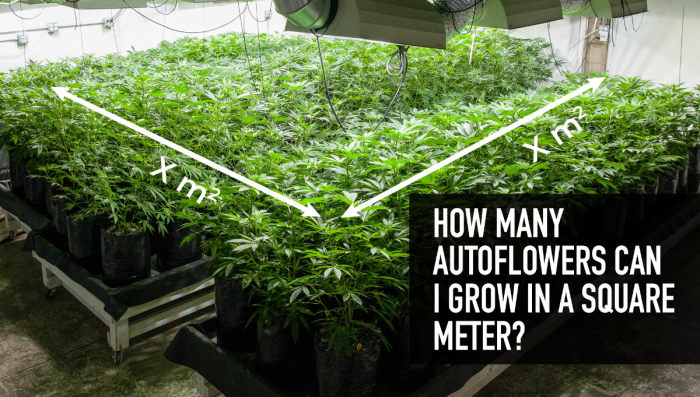
Low Ryder didn’t produce great returns and wasn’t as big as its counflavorarts. But, now, the situation is different. Along with the advantage of growing without relying on the seasons, autos also produce great returns! Yes, they are still not big as photoperiod plants, but they grow up to 4-5 feet outdoors without any maintenance.
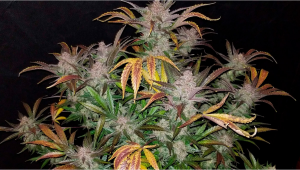
If you grow them indoors, you can expect them to grow up to 3-4 feet. It will also help if you don’t have a large growing space because you can grow two autos in the space required to grow one photoperiod plant. Coming to the temperatures, you can expect amazing growth even if the temperature dips as low as 15°C. Some growers claim that autos can grow when the temperatures are below 15°C without a problem, but will depend on the overall conditions.
Photoperiod plants struggle as soon as the temperatures go below 15°C, but since autos actually thrive even when the climate doesn’t support plant growth, you can grow autos even if you reside in areas where it gets too chilly.
Due to its genetics, Ruderalis plants are very resistant to harsh temperatures. Since its growing cycle is short (2-3 months) you will be able to grow a few plants even in the winter. Of course, the returns will not be as good as the amount of buds you get during summer when light is abundant, but don’t you think it’s amazing to return even 100 grams of bud per plant during winters?
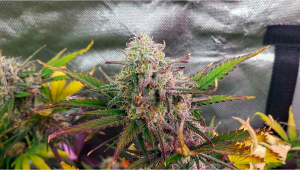
Ruderalis plants are also very resistant to mold and wet weather. The new generation of autos also carry the same traits and you’ll see that they do well even if the climate doesn’t support growth and reproduction of seeds. Since the cycle is shorter compared to other plants species, you’ll not have to worry too much about pests and infections. Generally, it takes about a month for pest attacks to destroy plants, but they don’t do much damage with autos because the plants reach their flowering period and you can return buds before the plant starts struggling.
| Best Seeds To Grow in Winter | |||
|---|---|---|---|
| Seed | Seed to return | strength % | Smell |
| Strawberry Banana Auto | 70-77 days | Up to 27% | Banana, strawberry, fruits |
| Gorilla Cookies Auto | 70 days | Up to 27% | Cookie, gas, earthy, kush |
| Strawberry Pie Auto | 56-63 days | Up to 26% | Candy, strawberry, cookies |
| Purple Punch Auto | 63 days | Up to 24% | Muffins, blueberry, spicy |
| Gorilla Glue Auto | 63-70 days | Up to 24% | Pine, lemon, peppery |
| Blackberry Auto | 63-70 days | Up to 23% | Berry, sweet earthy |
| OG Kush Auto | 63 days | Up to 23% | Pine, herbal, peppery |
| Rhino Ryder Auto | 63-70 days | Up to 20% | Cinnamon, earthy, fruity, peppery |
Thus, there's no mystery in how to grow lowryder indoors or any auto, no matter where you reside, you can plant an auto seed and grow a stunning plant as long as you're growing the best ruderalis seed you can and as long as the temperatures stay in the range of 15 to 25°C.
4. Factors to Consider When Considering Growing Auto Seeds in Colder Climates
Growing any plants during the winter months is no easy task, and that is as true with auto plants as with anything else. The one thing that is going in its favor is the fact that the genetic heritage of autos (Ruderalis) comes from the cold, harsh climates of northern Europe. But, even with this genetic predisposition to grow in colder climates, some thought and planning should be implemented before you consider starting a winter auto plants garden.
- Indoor or Outdoor - it goes without saying that it is much easier to control the environment indoors than it is outdoors. Even in the coldest places, it is possible to heat and control the humidity in a grow room to the point that the plants will have no idea of the harsh conditions outdoors. But, this is not what we are really discussing here today. If you want to give your outdoor garden the best chance to survive and flourish during the winter months, we recommend starting the crop indoors under lights. This gives the roots their best chance at laying down a great base for the rest of the lifecycle.

- Keep a close eye on the environmental factors - If you see the temperature regularly dipping below about 12℃ (55℉) then it may be time to start thinking about other lodgings. A greenhouse can be super useful for outdoor gardens in the winter months and can help you control the temperature ranges at least to some extent.
- Choose suitable genetics - To give yourself the very best chance of a healthy and fruitful winter return, grab the best genetics for the conditions. In general, Ind dominant seeds will fair better than Sat dominant seeds in colder weather, as they have the genetic linage that promotes healthy growth in colder conditions.
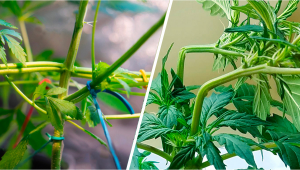
- Do not use any HST techniques, and be very careful with LST - similar to the last point, any type of plant training can cause a drop in growth rates. That means that HST techniques are totally unsuitable for winter crops, and any LST techniques should be implemented with great care. When tying down a winter crop plant, do so slowly and over a longer period than you might with a summer plant to ensure the lowest amounts of stress possible. Or, just leave the plant be and allow it to grow naturally.
- Choose the right location - You can help a winter crop along immensely by simply choosing the right location. You want a spot with the most sunlight as possible, that is well protected from strong wind (although some air movement is advised) and from heavy rain. Of course, water is required for the crop, but heavy rain can cause a whole range of issues.
- Plant in the pots you intend to return from - In most cases we recommend starting autos in the pots that you intend to use for the entire lifecycle, but this is especially important for winter crops. We want to give winter crops the absolute best chance at survival, and to do that we want to reduce any type of stress. Transplanting, no matter how careful you are, will cause at least some form of stress on the plant and can pause the growth for anywhere from a few days to a whole week.
Comments